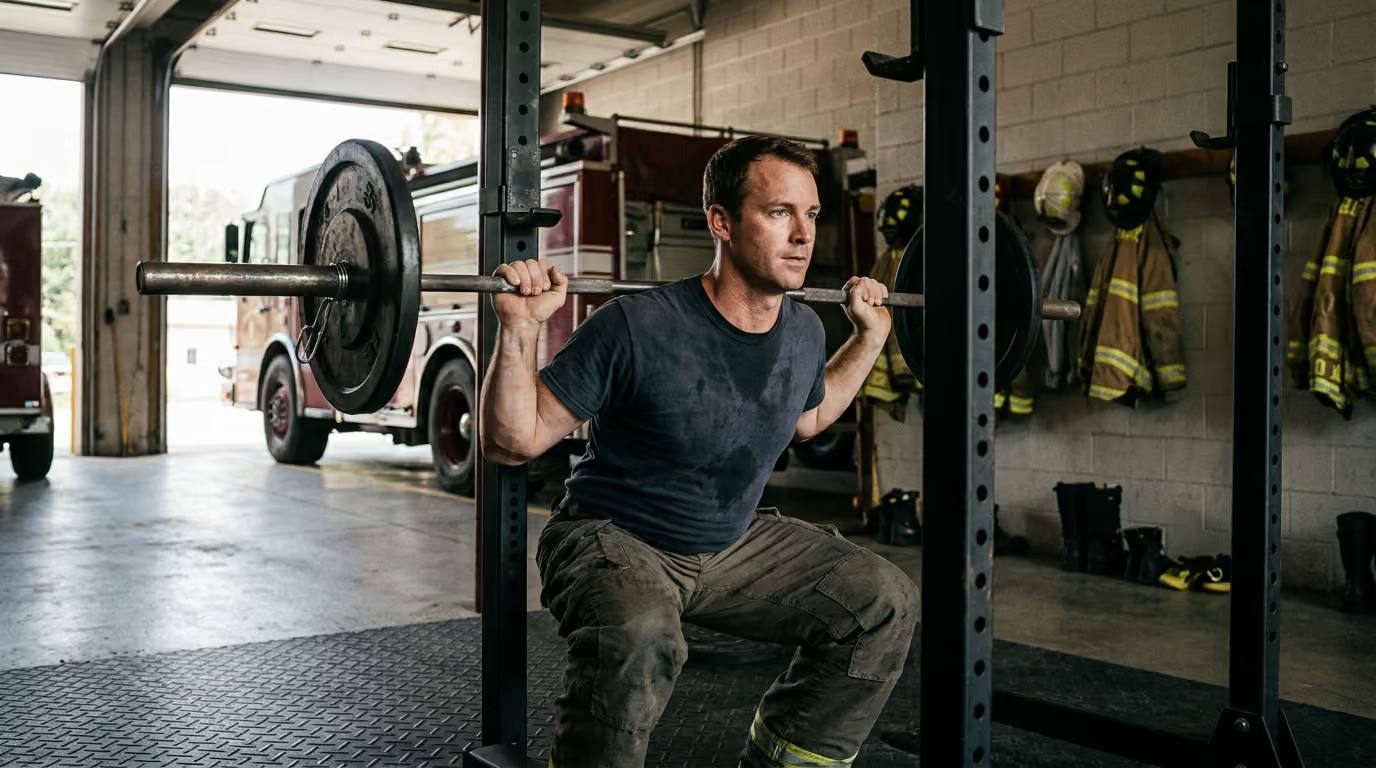

Consuming 1.4 to 2.0 grams of protein per kilogram daily helps first responders build and maintain lean muscle despite unpredictable shift schedules and chronic operational stress.





You step onto the apparatus floor or sit in your patrol vehicle after three consecutive night shifts. Your gear feels heavier than usual, your appetite is blunted from disrupted sleep, and you missed two meals because of late calls. You know that maintaining lean muscle mass protects your joints, supports occupational output, and preserves long-term metabolic health. Yet trying to follow conventional muscle-building advice feels disconnected from the realities of rotating rosters, unpredictable call volumes, and broken sleep.
Building and preserving skeletal muscle across an emergency services career is fundamentally an operational systems challenge. It requires balancing energy intake, protein availability, progressive resistance training, and recovery capacity against the demands of the job. When shift work disrupts your routine, success comes from adaptable systems rather than rigid bodybuilding protocols.
Skeletal muscle is built and maintained when the body receives a progressive training stimulus, sufficient total energy, adequate dietary protein, and enough recovery to synthesize new tissue. For first responders, the primary barrier to gaining or keeping lean mass is rarely a lack of effort in the gym. The primary barrier is usually chronic under-fueling during demanding shifts combined with unmanaged sleep deficits that impair recovery.
To protect and build muscle throughout a career, aim for a daily protein intake between 1.4 and 2.0 grams per kilogram of body weight, distributed across three to five feedings. Pair this with a modest calorie surplus of 5 to 15 percent above maintenance on training and high-demand days. Anchor your lifting around full-body resistance sessions two to three times per week using a minimum effective dose approach. Adjust your daily training volume using readiness tiers based on sleep quality and operational fatigue rather than forcing aggressive workouts on severe sleep debt.
Skeletal muscle hypertrophy occurs when muscle protein synthesis exceeds muscle protein breakdown over extended periods. Resistance exercise provides the mechanical tension and metabolic stress required to trigger synthesis. Dietary protein provides the essential amino acids, particularly leucine, required to build new contractile proteins.
Credible sports nutrition research establishes clear parameters for these physiological processes:
The International Society of Sports Nutrition position stand demonstrates that daily protein intakes of 1.4 to 2.0 grams per kilogram of body weight are sufficient for building and maintaining muscle in active individuals. Higher intakes ranging from 2.3 to 3.1 grams per kilogram of fat-free mass become valuable during periods of calorie restriction or severe operational stress to prevent muscle loss.
Research examining protein feeding patterns shows that distributing protein evenly across the day can stimulate muscle protein synthesis more effectively than skewing intake toward a single evening meal. Consuming at least 0.24 to 0.40 grams of high-quality protein per kilogram of body weight per feeding supports repeated anabolic responses. Complete protein sources containing all essential amino acids produce a stronger synthetic response than incomplete plant proteins unless lower-quality sources are consumed in higher total quantities.
Updated guidance from the American College of Sports Medicine suggests that accumulating approximately 10 hard sets per muscle group weekly provides a reliable stimulus for hypertrophy. Training with loads between 60 and 80 percent of one-repetition maximum promotes both strength and muscle mass. Sets do not need to reach absolute muscular failure to stimulate growth. Leaving one to three repetitions in reserve produces comparable hypertrophy while generating significantly less systemic fatigue.
Controlled metabolic research highlights the direct impact of sleep disruption on muscle physiology. A single night of total sleep deprivation has been shown to reduce post-meal muscle protein synthesis by 18 percent in healthy individuals. Observational studies in first responder populations reveal that emergency personnel frequently sleep over two hours less on shift days compared to non-shift days. This sleep loss coincides with increased caloric intake from refined foods and a significantly higher rate of musculoskeletal injury.
Muscle hypertrophy is energetically expensive. While novice trainees or individuals with high body fat can gain muscle in a calorie deficit, experienced lifters require adequate energy availability. Research in wildland and structural firefighting demonstrates that operational tasks create substantial energy deficits. Firefighters routinely expend several hundred more calories than they consume during active duty tours, which places them in a catabolic state if food intake is not deliberately managed.
Standard fitness guidelines assume a predictable schedule, consistent meal timing, and uninterrupted nightly sleep. Emergency response work regularly challenges all three assumptions.
Stationary periods in a vehicle or station can instantly transform into high-output physical labor. Fire suppression, patient extrication, heavy equipment carries, and tactical movements rapidly deplete muscle glycogen. Research measuring energy demands during wildland fire operations shows daily expenditures ranging from 2,800 to over 6,000 kilocalories. When energy intake fails to match these spikes, the body breaks down endogenous tissues to meet metabolic demands.
Working through the night alters gastrointestinal motility, insulin sensitivity, and appetite-regulating hormones. Ghrelin levels rise while leptin drops, driving cravings for quick-energy, high-sugar snacks. At the same time, digestive efficiency declines during nocturnal hours. Eating large, heavy meals at 3:00 a.m. can cause gastrointestinal distress, while skipping food entirely leads to prolonged catabolic windows.
Carrying duty belts, body armor, self-contained breathing apparatus, and structural turnout gear adds 20 to 60 pounds of external load. This chronic load carriage increases compressive stress on the spine, hips, and knees. Resistance training must account for this occupational loading by managing spinal fatigue and selecting joint-friendly exercises. Adding heavy, high-volume spinal loading immediately before or after a demanding shift increases injury risk without providing superior hypertrophy benefits.
Responding to high-acuity calls activates the sympathetic nervous system, releasing cortisol and catecholamines. Frequent sympathetic activation elevates resting muscle tone, suppresses appetite, and delays the parasympathetic state necessary for tissue repair. Training programs for first responders must function within this total stress budget rather than competing with it.
Supporting muscle growth on a rotating schedule requires a structured yet adaptable approach to nutrition. You can review our detailed shift nutrition framework for broader fueling strategies across variable rotations.
Rather than maintaining a static calorie target every day, adjust your intake based on anticipated physical output.
Use a baseline maintenance intake on administrative days or quiet off-duty periods. Total calories should match expenditure, with protein maintained at 1.6 to 2.0 grams per kilogram of body weight. Carbohydrates can be moderate, focusing on nutrient-dense, high-fiber sources to support gut health and recovery.
Add a modest surplus of 5 to 10 percent above maintenance, equivalent to roughly 200 to 400 additional kilocalories. This surplus provides the raw material for muscle repair without promoting excess fat gain. Place the additional energy around training sessions and during the active hours of your shift.
During extended structure fires, prolonged search operations, or consecutive high-volume call shifts, prioritize total caloric density. Energy expenditure can surge unexpectedly. Increase carbohydrate intake to sustain muscle glycogen, and use liquid calories or energy-dense foods to prevent severe negative energy balance.
Wildfire deployments or natural disaster responses require high-energy, shelf-stable nutrition. Calorie targets often exceed 4,000 to 5,000 kilocalories daily. Emphasize shelf-stable proteins, dried fruits, nut butters, and electrolyte replacement to prevent significant lean tissue wasting.
Clock-based eating schedules fail on rotating shifts. Instead of planning meals for specific hours, anchor your protein intake around your sleep and wake cycle.
Divide your daily protein target into three to five portions containing 25 to 45 grams each. Consume your first protein feeding within two hours of waking, regardless of whether you wake at 6:00 a.m. or 4:00 p.m. Space subsequent feedings three to five hours apart throughout your operational day. Finish with a protein-rich feeding one to two hours before your main sleep period to support nocturnal muscle protein synthesis.
Achieving a calorie surplus can be difficult when operational stress suppresses appetite. Eating high-volume, fibrous meals on shift can cause sluggishness and abdominal discomfort.
Use calorie-dense, low-volume foods to meet energy targets efficiently:
Every first responder needs a reliable food hierarchy that survives missed station meals and interrupted cooking.
These are refrigerated whole-food meals prepared at home or at the station. Examples include grilled chicken breast with jasmine rice and roasted vegetables, or lean ground beef with sweet potatoes. These form the nutritional baseline when shift flow allows normal eating.
Keep items in your personal bag that require no heating and can be eaten in three minutes. Examples include Greek yogurt cups, pre-made turkey wraps, string cheese, apples, bananas, and single-serving protein shakes.
Store non-perishable protein and carbohydrate sources in your locker or patrol bag. Keep whey protein powder, canned tuna or chicken pouches, beef jerky, single-serve oatmeal packets, and trail mix readily available. These ensure you never go eight to twelve hours without protein due to extended incidents.
Resistance training must stimulate muscular adaptation while preserving operational readiness. Workouts should leave you capable of performing demanding physical duties immediately following a session if an emergency occurs. To explore programming structures, review our guide on training around shift work.
Traditional bodybuilding splits that dedicate an entire session to a single muscle group are vulnerable to schedule disruptions. If a busy shift forces you to miss leg day, that muscle group may go untrained for two weeks.
Full-body sessions performed two to three times per week offer superior operational consistency:
Structure full-body training around multi-joint movement patterns that build functional muscle while reinforcing joint integrity:
Select bilateral and unilateral options such as goblet squats, safety bar squats, front squats, Bulgarian split squats, and reverse lunges. Unilateral variations reduce spinal compression while building hip stability and leg mass.
Incorporate Romanian deadlifts, trap bar deadlifts, kettlebell swings, and hip thrusts. These movements strengthen the posterior chain, protecting the lower back during heavy patient transfers and equipment carries.
Pair dumbbell bench presses, push-up variations, or neutral-grip barbell presses with chest-supported dumbbell rows, cable rows, and inverted rows. Prioritize horizontal pulling volume to counteract the forward-shoulder posture common in driving and gear-wearing positions.
Utilize half-kneeling overhead dumbbell presses, landmine presses, neutral-grip pull-ups, and lat pulldowns. Landmine and neutral-grip variations provide effective muscle stimulation while preserving shoulder joint clearance under fatigue.
Include suitcase carries, farmer walks, suitcase deadlifts, and ab wheel rollouts. These build upper back, forearm, and core thickness while improving real-world load carriage capacity.
You do not need high-volume training programs to build or preserve lean mass. Evidence indicates that performing two to four challenging working sets per muscle group across two to three weekly sessions preserves almost all muscular adaptations during high-stress periods. You can read more about balancing volume in our article on minimum effective dose training.
Focus on high movement quality, controlled eccentrics, and full active ranges of motion. Two hard, technically clean sets taken close to failure will stimulate muscle growth without generating the excessive systemic fatigue caused by six mediocre sets.
The primary danger of training on shift is forcing high-intensity workouts when your central nervous system and muscular system are already depleted by sleep loss and occupational tasks. Autoregulation allows you to adjust volume and intensity based on daily readiness.
Evaluate your recovery status before each session using a simple three-tier assessment based on recent sleep, call volume, and physical fatigue.
Use this tier when you have achieved more than seven hours of quality sleep and occupational stress has been low. Perform your full planned workout. Train with higher volume, push progressive overload on primary compound lifts, and work within one to two repetitions in reserve.
Use this tier when sleep was fragmented, lasting between four and six hours, or when you managed several moderate calls. Reduce total session volume by 30 to 50 percent by performing only two working sets per exercise instead of three or four. Stop all sets two to three repetitions shy of failure, and replace technically demanding free-weight movements with stable machines or dumbbell variations.
Use this tier after consecutive night shifts, major operational incidents, or when total sleep over 24 hours was under four hours. Do not perform heavy resistance training. Replace the lifting session with a 20-minute mobility routine, low-intensity zone 2 walking, or a dedicated recovery nap. Forcing intense lifting in a red-tier state increases injury risk and exacerbates muscle protein breakdown.
Training to absolute failure causes disproportionate neuromuscular fatigue and muscle damage, extending recovery times to 48 or 72 hours. For emergency personnel who may be called to perform heavy physical tasks at any moment, this fatigue is an operational liability.
Keep the majority of your working sets between one and three repetitions in reserve. This means ending the set when you could still perform one to three more repetitions with perfect technical form. This approach delivers virtually identical hypertrophy signals compared to training to absolute failure, while allowing your nervous system to recover much faster.
Plan a deload week every four to eight weeks, depending on shift demands and cumulative fatigue. A deload is not a week of complete inactivity. It is a planned reduction in training stress that allows joints, connective tissues, and the nervous system to regenerate.
During a deload week:
Sleep remains the single most potent recovery tool for preserving muscle tissue and regulating hormones. Understanding how shift timing affects rest is vital. You can learn more about managing shift fatigue in our review of circadian fatigue and shift length.
Data collected from emergency personnel demonstrates that shift days involving significant sleep deficits correlate with a 3.7-fold increase in musculoskeletal injury rates. Sleep deprivation impairs motor unit recruitment, reduces reaction time, decreases pain tolerance, and elevates systemic inflammatory markers.
When sleep is restricted, your body produces higher levels of cortisol, which accelerates muscle protein breakdown. Concurrently, circulating testosterone and growth hormone levels decline, blunting the anabolic response to training. If you chronically sleep fewer than six hours while continuing to lift heavy weights, your body struggles to repair the microtrauma generated during workouts.
First responders cannot always control when calls occur, but they can control their sleep environment and post-shift behaviors. Explore our comprehensive guide to shift-specific sleep strategies for deeper protocols.
Implement these environmental controls for daytime sleep following night shifts:
When total sleep duration is unavoidably shortened, utilize secondary recovery modalities to support muscle retention:
First responders often encounter specific misconceptions that derail muscle-building efforts.
Carrying gear up stairs or standing for hours on a scene is physically demanding, but it does not replace structured lower-body resistance training. Occupational tasks provide metabolic stress and endurance demands, but they lack the controlled eccentric loading, progressive resistance, and balanced range of motion needed for balanced hypertrophy. Relying on work tasks for leg development often leads to hip and knee overuse injuries paired with underdeveloped posterior chain musculature.
Some responders assume that because their job is physically demanding, they can consume unlimited calories from station junk food. An excessive caloric surplus does not accelerate muscle growth; it simply increases visceral and subcutaneous fat storage. Excess body fat increases cardiovascular strain, impairs heat dissipation inside protective gear, and degrades relative strength. Keep your surplus modest and focused on nutrient-dense fuel.
Worrying about consuming protein within twenty minutes of finishing a workout creates unnecessary stress. The total amount of protein consumed across the entire 24-hour period is far more critical than immediate post-workout timing. If a call interrupts your post-workout shake, your gains are not lost. Simply consume your planned protein feeding at the next available opportunity.
Pushing through heavy squats or deadlifts after staying awake for 24 hours is a poor strategy. Severe sleep deprivation drastically alters movement mechanics and impairs spinal stabilization reflexes. Training heavy under extreme exhaustion accelerates joint wear, causes connective tissue injuries, and promotes chronic overreaching without building meaningful muscle mass.
Many responders who struggle to build muscle believe they are eating enough simply because they feel full. High-stress shift work suppresses appetite and delays gastric emptying. When you track actual food intake during busy operational cycles, total calories are often hundreds below maintenance. Consistent muscle growth requires tracking your intake periodically to confirm you are meeting your baseline targets.
The following examples demonstrate how different emergency personnel can structure nutrition and training around unique operational demands.
A 32-year-old firefighter working a 24/48 schedule trains four days per week but struggles to gain muscle and frequently feels depleted on shift days. Analysis reveals that while his home nutrition is adequate, his station intake drops significantly due to interrupted cooking and high call volumes.
The primary intervention is establishing a reliable portable nutrition strategy. The firefighter packs an insulated lunch bag containing ready-to-drink protein beverages, Greek yogurt, trail mix, and pre-cooked rice bowls. He consumes a portable feeding immediately after morning apparatus checks and keeps shelf-stable snacks in his gear pocket. His training is shifted to a three-day full-body template performed on off-duty days and calm station mornings, utilizing yellow-tier volume reductions when night calls exceed four runs.
A 28-year-old law enforcement officer working 12-hour night rotations from 18:00 to 06:00 experiences constant fatigue, poor recovery, and gradual muscle loss. She routinely fasts throughout her shift, relies on energy drinks, and consumes a massive fast-food meal at 06:30 before attempting to sleep.
Her protocol is restructured to anchor nutrition to her waking hours. She eats a solid whole-food meal at 15:30 after waking, trains for 45 minutes before her shift begins, and brings two balanced, easily digestible meals in a patrol cooler. She cuts off caffeine by 01:00 and consumes a small, light protein feeding at 06:30 to prevent waking from hunger. Her daytime sleep improves, supporting improved muscle retention and steady strength gains.
A 24-year-old wildland firefighter on an initial attack handcrew faces extreme daily energy expenditures between 3,500 and 5,000 kilocalories during fire season. He experiences severe weight loss and strength decline over two-week assignments.
During active deployment rolls, formal resistance training is suspended to avoid excessive muscle breakdown. The entire operational goal shifts to energy density and protein preservation. He supplements standard camp meals with personal shelf-stable rations, including nut butter squeeze packs, beef jerky, tuna pouches, and carbohydrate electrolyte mixes added to his water bladder. By consuming small, dense feedings every two to three hours on the fire line, he limits operational weight loss and protects his lean tissue until the season concludes.
A 46-year-old paramedic with eighteen years of service manages chronic lower back stiffness and bilateral knee discomfort. He wants to maintain muscle mass and physical capability without aggravating existing orthopedic conditions.
His program transitions away from high-axial-load barbell lifts toward joint-friendly alternatives. He replaces barbell back squats with belt squats and Bulgarian split squats, swaps conventional deadlifts for trap bar Romanian deadlifts, and uses neutral-grip dumbbell presses. He trains twice weekly using controlled tempos and a strict two-repetition reserve. This adjustment maintains his muscle mass while eliminating chronic joint pain and preserving duty readiness.
Preserving muscle is essential for first responder durability, but hypertrophy training must never compromise field safety or operational capability.
Carrying excessive muscle mass increases metabolic oxygen demand during high-intensity tasks. A first responder needs a balanced combination of muscular strength, power, and aerobic capacity. Stacking excessive muscle mass at the expense of cardiovascular conditioning leads to rapid air consumption when breathing from an SCBA cylinder and early fatigue during foot pursuits or patient rescues. Your training program must integrate aerobic and anaerobic conditioning alongside resistance training.
Accumulating excessive training volume while managing operational fatigue can lead to non-functional overreaching. Symptoms include persistent muscle soreness, elevated resting heart rate, sleep disturbances, irritability, chronic digestive issues, and declining performance on duty. If you notice these symptoms, immediately reduce training volume by 50 percent for two weeks, increase total energy intake, and prioritize sleep extension.
Never train to absolute failure immediately before a shift. Starting an operational duty tour with severe local muscle fatigue or compromised grip strength creates a safety hazard for yourself, your crew, and the public. Schedule your demanding training sessions during off-duty recovery windows or immediately following shifts, ensuring adequate rest before returning to duty.
While structured training and nutrition solve many muscle preservation challenges, certain situations require specialized clinical evaluation.
Consult a licensed registered dietitian specializing in sports nutrition or tactical populations if you struggle to maintain body weight, experience chronic gastrointestinal issues on shift, or need individualized dietary management for underlying metabolic conditions such as elevated blood lipids or prediabetes.
Seek evaluation from a physician or sports medicine specialist if you experience persistent joint pain, unexplained muscle weakness, chronic exhaustion that does not resolve with rest, or suspected endocrine abnormalities. A primary care physician can evaluate thyroid function, hormone levels, vitamin D status, and metabolic markers to rule out clinical conditions that impair recovery.
If you struggle with chronic insomnia, excessive daytime sleepiness, or persistent non-restorative sleep, request a clinical sleep evaluation. Conditions such as obstructive sleep apnea are highly prevalent among first responders and must be treated directly before training and nutrition protocols can deliver their full benefits.
Revisit this framework whenever your operational schedule undergoes a major change, such as transitioning to a new shift rotation, moving from patrol to specialized units, or preparing for an extended seasonal deployment. Reassessing your energy availability, protein distribution, and training readiness every few months ensures your physical capability remains resilient throughout your career.
Building and preserving muscle across decades of emergency service work is not about chasing extreme physical transformations. It is about implementing reliable, adaptable systems that protect your health, sustain your operational readiness, and ensure you finish your career with the strength and capability to enjoy retirement.
Stay connected for research-led guidance on duty fitness, shift-work sleep, injury recovery, stress, nutrition and career longevity. Practical ideas for first responders who want to stay capable on the job, recover well and protect their health for the long run.



Read practical guidance on first responder fitness, recovery, sleep, nutrition and resilience for demanding work and a long, active career.
read the blog



