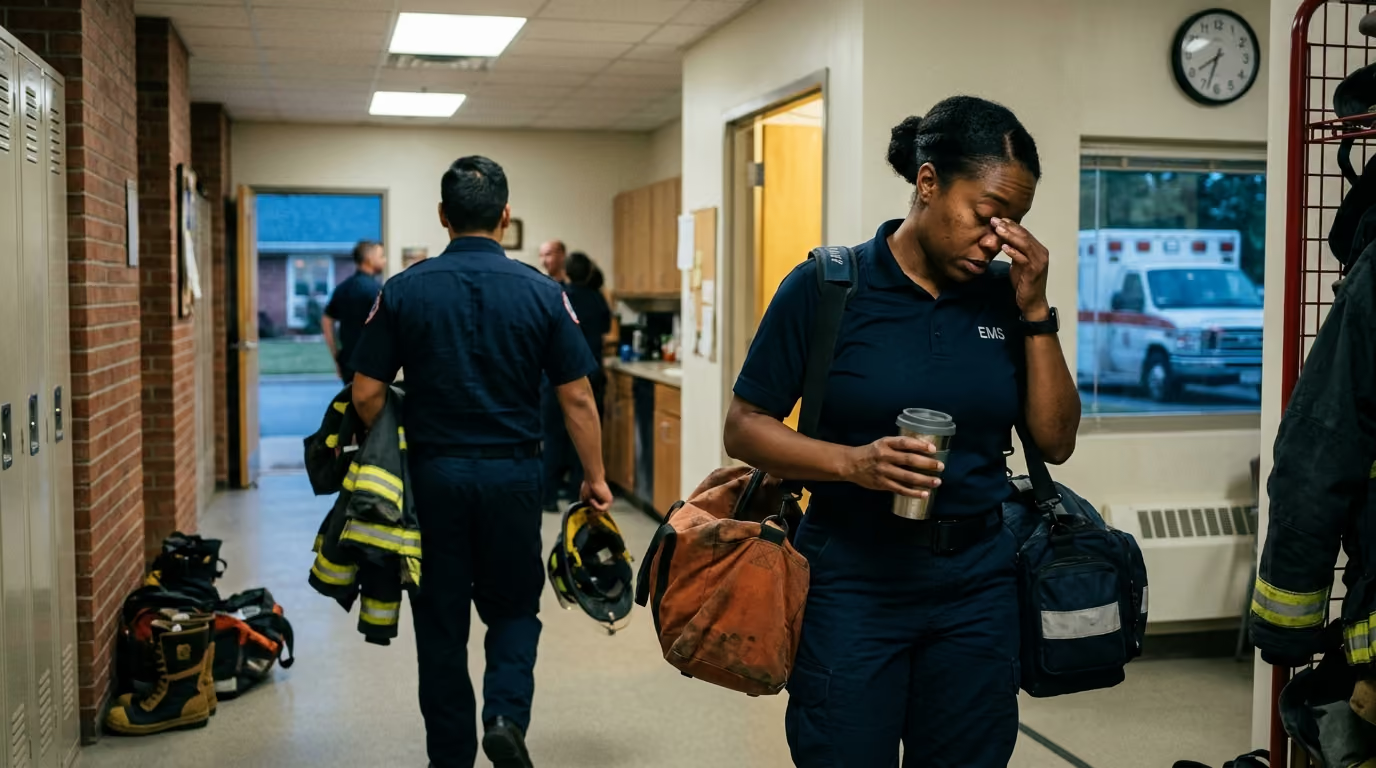

First responder shift architectures impair natural sleep biology, requiring practical 24-hour duty cycle strategies and tactical recovery tools to mitigate long-term operational fatigue.





Many first responders search online for an answer to a single, frustrating problem: why do you feel completely exhausted on shift yet find it impossible to sleep when you get home?
The short answer is that irregular emergency schedules force your body to fight two opposing biological drives at the same time. While being awake for long hours creates massive physiological sleep pressure, working against your internal circadian clock keeps your nervous system stimulated when you want to rest. When you try to sleep during the day, sunlight, elevated body temperature, and daytime hormones actively signal your brain to stay awake. This mismatch degrades sleep quality, fragments your rest, and leaves you carrying accumulated fatigue into your next tour of duty.
Solving this challenge requires understanding the biological mechanisms that control your alertness. By aligning environmental cues like light, meal timing, and strategic rest with the realities of emergency work, you can manage sleep debt and protect your long-term health.
Human sleep and wakefulness are governed by a continuous interaction between two internal biological forces, alongside external timing cues. Sleep researchers refer to this framework as the three-process model of sleep regulation.
The first component is Process S, commonly known as homeostatic sleep pressure. From the moment you wake up, your brain metabolizes energy, which causes a steady accumulation of adenosine and other neurochemical byproducts. The longer you stay awake, the heavier this sleep pressure becomes. Under normal conditions, Process S reaches its peak late in the evening. It then dissipates exponentially once you achieve consolidated sleep, resetting your baseline for the next day.
The second component is Process C, the circadian timing system. Process C operates on a near 24-hour cycle directed by the suprachiasmatic nucleus in the brain. This central pacemaker coordinates core body temperature, hormone secretion, blood pressure, and autonomic nervous system tone. Unlike Process S, the circadian clock does not care how long you have been awake. Instead, it generates an alerting signal that peaks during the late afternoon and drops to its lowest biological level in the early morning hours before dawn.
The third component consists of environmental and behavioral cues known as zeitgebers. German for time-givers, zeitgebers are external signals that synchronize your internal circadian pacemaker with the outside world. Sunlight is the primary zeitgeber, but meal timing, physical movement, core temperature changes, and social interactions also serve as timing anchors.
When you work a standard daytime schedule, Process S and Process C work together. Sleep pressure builds while circadian alertness keeps you functional across the day. Then, both processes align at night to facilitate deep, restorative sleep.
Emergency shift work creates circadian misalignment by tearing these systems apart. When you work overnight, high sleep pressure pushes you toward rest while your circadian rhythm attempts to maintain baseline alertness. When you return home in the morning, high sleep pressure helps you initiate sleep. However, your rising circadian alerting signal, daylight exposure, and rising core body temperature wake you up after only a few hours.
Understanding this split explains why daytime sleep after a night shift rarely feels as refreshing as nighttime rest. The issue is not just a lack of discipline or mental toughness. It is a fundamental conflict between the homeostatic drive for sleep and the circadian drive for wakefulness.
Emergency work requires a precise vocabulary for fatigue. In the field, terms like tiredness, exhaustion, and sleepiness are often used interchangeably. Clinically and operationally, they describe distinct physiological states that present different safety risks.
Sleepiness refers specifically to the biological tendency to fall asleep. It is driven directly by high sleep pressure and low circadian alertness. Sleepiness can be measured objectively by how quickly a person falls asleep in a quiet environment. In an ambulance, dispatch console, or patrol car, severe sleepiness manifests as involuntary head-bobbing, heavy eyelids, and brief attentional lapses known as microsleeps.
Fatigue is a broader state representing a reduced capacity for physical or mental work. Fatigue can develop from extended wakefulness, heavy physical exertion, chronic psychological stress, or prolonged cognitive demand. A responder can be severely fatigued while remaining completely unable to sleep due to high sympathetic nervous system activation, adrenaline spikes, or poor environmental conditions.
Reduced vigilance involves difficulty maintaining sustained attention over time and detecting infrequent signals. A responder suffering from reduced vigilance may feel awake while driving or monitoring telemetry, yet fail to notice a changing traffic pattern, an abnormal heart rhythm, or a subtle safety threat on scene. Vigilance drops significantly during circadian low points, even when a worker feels motivated to perform well.
Sleep inertia is the temporary grogginess, disorientation, and impaired cognitive processing experienced immediately upon waking. It occurs most severely when waking abruptly from deep slow-wave sleep. For emergency personnel sleeping in quarters, sleep inertia represents an acute operational risk. Waking to an alarm at 0300 can leave a responder with impaired decision-making and slow reaction times during the first 10 to 30 minutes of a call.
Distinguishing between these states allows crews to apply targeted countermeasures. A responder suffering from sleep inertia needs time and sensory stimulation to clear cognitive fog. A responder experiencing severe sleepiness requires immediate physical activity, environmental changes, or relief from safety-critical duties.
Your circadian system relies on environmental signals to maintain a stable 24-hour cycle. Among these inputs, light exposure is the dominant signal governing the master clock.
Photoreceptors in the retina contain a photopigment called melanopsin, which is sensitive to blue light wavelengths between 420 and 600 nanometres. When these receptors detect light, they transmit electrical signals directly to the suprachiasmatic nucleus. This signal suppresses the production of melatonin, the hormone responsible for signaling biological night to your organs and tissues.
During a night shift, bright light in station bays, vehicle cabins, hospital hallways, and computer terminals suppresses melatonin. This suppression helps you stay awake to perform critical tasks. However, exposure to bright morning sunlight during your commute home triggers that same alerting response. Even 20 minutes of unprotected sunlight on the drive home sends a powerful daytime signal to your brain, making it difficult to fall asleep once you get into bed.
Beyond the master clock in the brain, every organ system contains peripheral circadian clocks. These peripheral oscillators regulate local tissue function, including digestive enzyme secretion, liver metabolism, muscle repair, and immune activity. Peripheral clocks take their cues primarily from behavior rather than light.
Meal timing is the most influential behavioral zeitgeber for peripheral tissues. Consuming heavy, high-fat, or high-sugar meals during the biological night misaligns peripheral clocks from the central pacemaker. When you eat substantial calories at 0300, your digestive tract and metabolic organs activate while your brain remains in biological night mode. This internal desynchronization impairs glucose tolerance, increases gastrointestinal distress, and disrupts subsequent sleep quality.
Physical activity and ambient temperature also influence circadian stability. Heavy physical training late in a night shift elevates core body temperature and sympathetic nervous system tone. Because your body naturally drops its core temperature to initiate and maintain sleep, elevated post-workout temperatures delay sleep onset and reduce slow-wave sleep stages.
Managing environmental cues requires a deliberate strategy. First responders must use bright light and nutrition strategically to support duty alertness, then transition to darkness, cool temperatures, and quiet surroundings to facilitate daytime recovery. Responders looking to understand these dynamics can read about how nighttime light exposure affects cardiovascular health to see the wider physiological stakes.
Emergency service schedules vary widely across agencies, with each roster design presenting distinct challenges for biological recovery. Understanding how specific shift structures impact sleep biology allows personnel to plan their rest windows more effectively.
Twelve-hour rotating schedules, such as alternating blocks of day and night tours, create recurring circadian disruptions. Moving from day shifts to night shifts requires delaying your sleep phase, while rotating from nights back to days forces an unnatural phase advance. Forward-rotating rosters, which progress from day shifts to evening shifts and finally to night shifts, are physiologically easier to manage than backward-rotating patterns. The human biological clock naturally runs slightly longer than 24 hours, making it easier to delay your bedtime than to advance it.
Twenty-four-hour shifts introduce unpredictable sleep fragmentation. On paper, a 24-hour shift provides a long subsequent off-duty window. In reality, overnight call volume frequently turns a 24-hour duty period into an extended episode of continuous wakefulness. The Emergency Medical Services Sleep Health Study documented that while personnel averaged roughly 5.9 hours of sleep before 12-hour shifts and 6.4 hours before 24-hour shifts, their average sleep during active duty tours was only 3.2 hours.
Emergency personnel often rely on split sleep to survive demanding rosters. Split sleep involves breaking your daily rest into two or more distinct episodes, such as a four-hour core sleep in the morning followed by a 90-minute anchor nap in the late afternoon.
Split sleep is a pragmatic risk-management strategy when consolidated seven-hour rest is operationally impossible. It helps reduce acute sleep pressure and supports operational safety. However, split sleep should not be viewed as biologically identical to consolidated sleep. Fragmented rest cycles often reduce the proportion of deep slow-wave sleep and rapid eye movement sleep, which are vital for physical recovery and cognitive processing.
Unpredictable operational surges amplify the strain of any schedule. Mass-casualty incidents, prolonged structure fires, mandatory overtime, and delayed hospital handovers disrupt planned rest periods without warning. During extended operations, sleep debt accumulates rapidly. One emergency response study by safety researchers found that one in three responders deployed during Hurricane Katrina averaged five hours or less of sleep per night.
Chronic sleep debt cannot be fully cleared with a single long sleep episode. When you lose two hours of sleep each night over a four-day block, you accumulate an eight-hour physiological deficit. Clearing that debt requires several consecutive nights of quality rest, making protected off-duty time essential for long-term operational readiness. You can review structured recovery methods in our guide to building a shift-specific sleep plan.
The impact of irregular working hours on emergency responders is documented across extensive occupational and clinical research. The evidence base includes strong observational data, controlled laboratory trials, and comprehensive meta-analyses examining health, safety, and operational longevity.
Large-scale public safety studies reveal high rates of sleep problems across all emergency disciplines. Research indicates that 59% of firefighters report sleep deprivation, while 23% report clinical insomnia symptoms. Poor sleep quality affects an estimated 64% of emergency medical services personnel and 51% of law enforcement officers in surveyed populations.
A meta-analysis examining first responders involved in medical emergencies identified substantial baseline sleep pathology:
These figures show that sleep disorders are widespread occupational challenges within public safety organizations, rather than isolated individual problems.
The health consequences of chronic circadian disruption extend well beyond fatigue on duty. A comprehensive meta-analysis of 23 cohort studies published in occupational medicine literature revealed that night-shift workers experience a 13% increase in total cardiovascular disease events and a 27% increase in cardiovascular mortality. Furthermore, each additional five years spent working night shifts was associated with a 7% increase in cardiovascular disease incidence.
Metabolic health also suffers under irregular schedules. Circadian misalignment reduces insulin sensitivity, alters appetite-regulating hormones like leptin and ghrelin, and promotes central adiposity. Over several years, these disruptions elevate the long-term risk of type 2 diabetes and metabolic syndrome.
Cancer risk research presents a more nuanced picture. Epidemiological reviews describe the association between long-term night shift work and increased breast cancer risk as suggestive, though not definitive. Evidence regarding other cancer types remains limited and inconsistent across international cohorts.
The operational and cognitive costs of sleep loss are equally well documented. Sleep debt degrades sustained attention, impairs working memory, slows psychomotor reaction time, and increases risk-taking behaviors. A nationwide study of firefighters found that averaging six hours of sleep or less during overnight shifts increased the odds of occupational burnout by more than two and a half times.
While shift work is a primary driver of these outcomes, it interacts with other occupational hazards. Heavy physical workloads, dehydration, extreme heat stress, administrative friction, and psychological trauma all compound the physical toll of irregular hours. Detailed regulatory recovery baselines can be explored further in the CDC shift work fatigue report.
Applying sleep science to real-world emergency service requires structured routines for every phase of a shift. Managing light, rest, nutrition, and recovery across the 24-hour duty cycle helps mitigate the physiological impacts of irregular hours.
Preparation begins before you report for duty. If you are transitioning from daytime hours to a first night shift, prioritize a prophylactic anchor nap in the late afternoon. Resting for 60 to 90 minutes between 1300 and 1600 lowers baseline sleep pressure, providing cognitive protection for the early morning hours ahead.
Hydration should be established early. Dehydration accelerates cognitive fatigue and elevates cardiovascular strain during heavy gear work. Consume balanced meals containing complex carbohydrates, lean protein, and healthy fats prior to shift start, avoiding heavy meals that induce postprandial lethargy.
During the active work period, align your environment with operational demands. Maintain bright, cool-toned lighting in watch offices, report rooms, and station common areas.
The circadian low point occurs between 0200 and 0600. During this window, your core body temperature falls to its lowest point, reaction times slow, and involuntary micro-sleeps become more frequent. Use active movement, upright postures, verbal communication, and collaborative cross-checks on safety-critical tasks like drug calculations or vehicle operation.
If operational conditions permit, short strategic naps of 20 to 30 minutes in quarters can help lower accumulated sleep pressure. Set an alarm to prevent entering slow-wave sleep, and allow at least 15 minutes after waking for sleep inertia to dissipate before responding to emergency calls. Responders can learn more about managing shift physiology in our guide on how shift duration and circadian timing drive fatigue.
The transition from duty to home represents a major safety and recovery checkpoint. The morning commute is a high-risk period for drowsy driving motor vehicle collisions. If you feel your eyelids drooping, head bobbing, or vehicle drifting, pull over in a safe parking area for a 15-minute nap rather than attempting to force your way home.
To protect your upcoming sleep period, minimize morning light exposure. Wear dark, polarized sunglasses or blue light filtering glasses as soon as you exit the station. Avoid stopping for household errands, grocery shopping, or extended conversations in bright retail environments on your way home.
Your daytime sleep environment must closely simulate biological night. The room should be pitch black, quiet, and cool.
Use high-quality blackout curtains, window film, or a comfortable eye mask to block all external sunlight. Ambient room temperature should be kept between 65 and 68 degrees Fahrenheit (18 to 20 degrees Celsius) to support your body's natural temperature drop during sleep.
Use continuous white noise machines, box fans, or high-grade silicone earplugs to mask street traffic, lawnmowers, and household activity. Turn off digital devices or place them in do-not-disturb mode, reserving breakthrough alerts strictly for genuine family emergencies.
When sleep debt accumulates, first responders frequently turn to specific countermeasures to sustain performance. Used correctly, these tools support alertness and recovery. Used improperly, they compound circadian disruption and mask severe exhaustion.
Caffeine functions primarily as an adenosine receptor antagonist. It does not eliminate sleep debt or generate biological energy. Instead, it temporarily blocks adenosine from binding to its receptors in the brain, masking the sensation of sleep pressure.
Caffeine takes approximately 20 to 30 minutes to enter the bloodstream and reach peak alerting efficacy. Its elimination half-life ranges from five to seven hours, meaning half the caffeine you consume remains active in your system hours later. Consuming energy drinks or coffee during the final four to five hours of a night shift will interfere with deep daytime sleep.
A practical countermeasure for critical alertness dips is the caffeine-nap protocol. Consume a moderate dose of caffeine (approximately 100 to 200 mg) and immediately lie down for a 20-minute nap. The nap reduces homeostatic sleep pressure by clearing adenosine, while the caffeine begins working right as you wake up. For deeper insights into managing stimulants safely, read our breakdown on managing caffeine and energy during night shifts.
Melatonin is a hormone that regulates the timing of sleep rather than a direct sedative. The American Academy of Sleep Medicine provides a conditional recommendation for using low-dose melatonin to support daytime sleep among shift workers, though the overall certainty of the underlying evidence remains low.
If utilized under the guidance of a physician, low doses (0.5 mg to 3 mg) taken 30 to 60 minutes prior to your intended daytime sleep window can assist in signaling biological rest. High doses can cause daytime grogginess, vivid dreams, and residual sedation that compromises your fitness for duty. Melatonin should never be viewed as a substitute for a dark, cool, and quiet sleep environment.
Prescription sedatives, over-the-counter sleep aids, and alcohol present severe long-term risks for emergency personnel. Alcohol degrades rapid eye movement sleep, causes frequent awakenings in the second half of the rest period, and worsens obstructive sleep apnea. Reliance on pharmaceutical or chemical sedation creates tolerance and dependency while failing to deliver authentic, restorative sleep.
Digestion and metabolism follow distinct circadian rhythms. Insulin sensitivity drops significantly during the biological night, impairing your body's ability to process simple sugars and refined carbohydrates.
Limit nighttime nutrition to light, protein-forward snacks such as Greek yogurt, hard-boiled eggs, raw nuts, or lean meats paired with vegetables. Avoid large, heavy meals between midnight and 0600. Consuming your main meals within consistent daytime windows helps anchor peripheral circadian clocks and prevents gastrointestinal discomfort. Personnel can explore structured eating strategies in our resource on night shift time-restricted eating frameworks.
Fatigue management in public safety is not solely an individual responsibility. While personal discipline and sleep hygiene are critical, individual efforts cannot overcome unsafe schedule designs or extreme working hours.
The National Institute for Occupational Safety and Health (NIOSH) recommends establishing organizational fatigue management policies to protect responder safety. Key administrative controls include:
Individual responders must also recognize their physiological limits. Willpower, commitment, and operational experience do not neutralize the cognitive risks of severe sleep debt.
Driving home while severely fatigued carries risks comparable to operating a vehicle while intoxicated. Research demonstrates that sustained wakefulness of 17 to 19 hours produces psychomotor performance deficits equivalent to a blood alcohol concentration of 0.05%. Extending that wakefulness to 24 hours matches or exceeds an impairment level of 0.10%.
Never operate emergency vehicles, drive personal cars, handle complex pharmacology, or enter high-hazard scenes when experiencing severe cognitive impairment from acute sleep loss. Recognizing fatigue as a physical limitation rather than a personal weakness is essential for crew safety and longevity.
While occasional tiredness is common in emergency services, chronic sleep issues should not be dismissed as a standard part of the job. Persistent sleep disruption often indicates an underlying, treatable medical condition.
Shift Work Disorder (SWD) is a formal clinical diagnosis defined by the International Classification of Sleep Disorders (ICSD-3). Diagnostic criteria require:
Obstructive Sleep Apnea (OSA) is an important clinical concern for public safety personnel, affecting an estimated 30% of emergency responders. Characterized by repeated airway collapses during sleep, OSA causes frequent micro-arousals, drops in blood oxygen saturation, and profound daytime sleepiness.
Key symptoms that warrant a formal clinical evaluation include:
Untreated sleep disorders compound the cardiovascular, metabolic, and psychological strains of emergency service. If you experience chronic sleep issues, seek a comprehensive evaluation from a board-certified sleep physician. Modern clinical interventions, including positive airway pressure therapy, dental sleep appliances, and behavioral sleep medicine, can restore sleep architecture and improve your quality of life.
Managing shift work fatigue requires consistent, practical habits applied throughout every tour of duty. Use this field checklist to protect your sleep, recovery, and long-term capability this week.
Consistent sleep management is not about achieving perfect rest on an unpredictable schedule. It is about systematically applying biological principles to protect your cognitive clarity, operational safety, and physical health throughout your career and into retirement.
Stay connected for research-led guidance on duty fitness, shift-work sleep, injury recovery, stress, nutrition and career longevity. Practical ideas for first responders who want to stay capable on the job, recover well and protect their health for the long run.



Read practical guidance on first responder fitness, recovery, sleep, nutrition and resilience for demanding work and a long, active career.
read the blog



