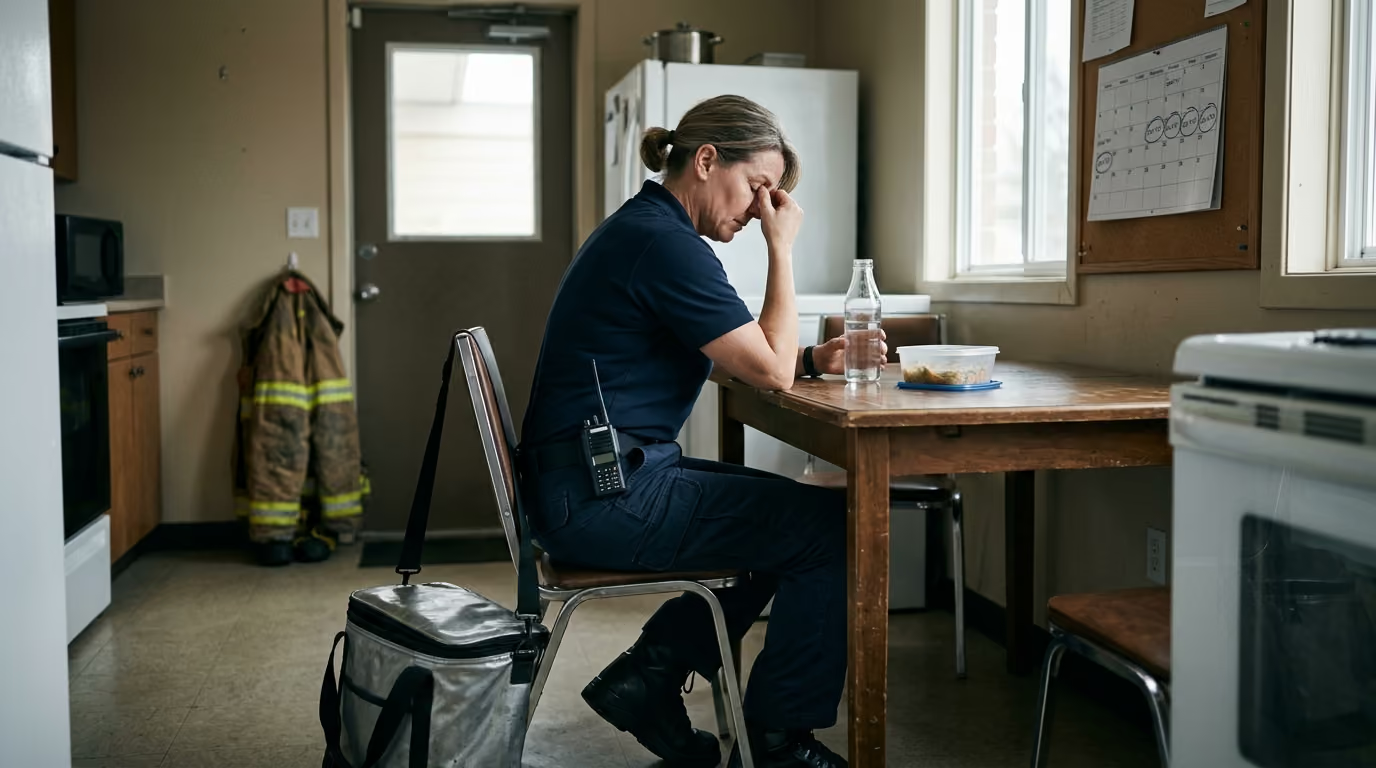

Night-shift recovery strategies help you reset your circadian rhythm, manage sleep debt, and reclaim your days off using proven light and nap protocols.





Transitioning off a block of night shifts is not an exercise in brute-force recovery. It is not simply sleeping until you wake up naturally, nor is it staying awake all day on pure willpower. Rather, the post-night transition is a controlled coordination of three biological forces: homeostatic sleep pressure, internal circadian timing, and environmental light exposure. When you manage these three levers systematically, you can recover from acute sleep debt without spending three days in physical fog, social disconnection, or persistent insomnia.
The direct solution for returning to a daytime routine without sacrificing your days off relies on a structured anchor sleep strategy. After your final night shift, you protect a short, controlled sleep block of three to four hours in the morning. You wake in the early afternoon, get exposed to bright outdoor light, engage in light physical movement, and build sufficient homeostatic sleep drive to fall asleep at a standard nighttime hour that same evening. This plan relieves immediate exhaustion, protects daytime functioning, and initiates the circadian realignment needed for the rest of your week.
Understanding how to execute this adjustment requires a closer look at the underlying physiology, the clinical evidence, and the operational demands that shape shift-work recovery.
The primary challenge of finishing a night-shift rotation is an internal conflict between two physiological mechanisms: the homeostatic sleep drive and the circadian timing system.
Homeostatic sleep pressure is driven by the accumulation of adenosine in the basal forebrain and cortex. The longer you remain awake, the higher this pressure climbs. By the end of a twelve-hour or fourteen-hour overnight shift, homeostatic pressure is extremely high. Your brain demands slow-wave sleep to clear metabolic waste products and restore cellular energy balance.
At the same time, your circadian pacemaker, located in the suprachiasmatic nucleus of the hypothalamus, operates on an approximate 24-hour cycle. If you have worked multiple consecutive overnights, your master clock has begun a circadian phase delay. It expects sleep during the daylight hours and wakefulness during the night.
When you clock out in the morning, your circadian system begins promoting wakefulness. Cortisol levels rise, core body temperature starts its daily climb, and daytime alerting signals increase. You find yourself physically exhausted yet biologically primed for alertness.
A common mistake is treating sleep debt and circadian misalignment as the exact same problem. Sleep debt represents a quantifiable deficit of total sleep hours. Circadian misalignment represents an improper match between your internal biological rhythms and the external environment.
A long recovery sleep of nine or ten hours immediately after your final night shift clears your acute sleep debt. However, it also anchors your circadian phase to the daytime hours. When you wake up at 5:00 p.m. your brain assumes the day is just beginning. You will have virtually zero homeostatic sleep pressure by 11:00 p.m. leading to hours of tossing and turning in bed.
This dynamic creates social jet lag. Social jet lag occurs when your biological clock is set to one schedule, but your personal, family, or operational obligations force you to live on another. Managing this transition requires you to manipulate your sleep pressure and light cues so your body clock shifts without causing prolonged insomnia.
Occupational health research provides clear observations regarding the toll of night work on sleep architecture and circadian stability. A large-scale UK population study of more than 277,000 workers demonstrated that shift workers consistently report shorter sleep duration and poorer sleep quality than day workers. The chronic restriction of recovery sleep is a primary driver of metabolic, cardiovascular, and cognitive strain across shift-working populations.
The American Academy of Sleep Medicine and the National Institute for Occupational Safety and Health have examined various methods for managing schedule transitions. Evidence indicates that Shift Work Sleep Disorder affects between 10% and 38% of the shift-working workforce. This clinical condition is characterized by chronic insomnia, excessive sleepiness, or both, directly linked to work schedules that overlap the natural biological sleep window.
Systematic reviews of workplace-based sleep interventions show that structured sleep-hygiene practices reliably increase total sleep time. In a systematic review examining health interventions for shift workers, 55% of the analyzed studies reported measurable increases in 24-hour sleep duration. Randomized controlled trials within that review demonstrated average sleep gains ranging from 0.34 to 0.99 hours per day.
However, the evidence on full schedule adaptation remains nuanced. A comprehensive Cochrane review found limited evidence that adjusting shift rotation sequences alone fixes subjective sleepiness or objective sleep disruption. The physiological response varies significantly between individuals based on chronotype, age, and domestic environment.
Research published in occupational sleep literature indicates that obtaining sufficient sleep prior to starting a night block provides a protective buffer against cognitive degradation. When workers enter a night block with accumulated sleep debt, their ability to recover during the post-night transition window drops sharply.
Consensus sleep hygiene guidelines specifically support the strategy of taking a shortened sleep episode following the final night shift, followed by an earlier bedtime that evening. This approach leverages high sleep pressure to realign the sleep period with the nighttime hours. The evidence confirms that while total sleep duration must be protected over the complete 24-hour cycle, dividing or shortening the first post-shift sleep episode is an effective tool for circadian realignment.
Applying circadian science in an academic setting is straightforward. Applying it in the emergency services is far more complex. Firefighters, police officers, paramedics, and emergency medical personnel face unique occupational hurdles that make transitioning off night shifts uniquely difficult.
Emergency responders rarely finish a shift in a state of calm fatigue. An acute call during the final hour of a shift can spike sympathetic nervous system activity. Elevated circulating catecholamines, high cortisol, and lingering psychological activation prevent rapid sleep onset upon arriving home. If you want to understand how active decompression techniques clear residual arousal before heading home, review our resource on clearing residual tension between calls.
Commuting home presents a severe safety risk. Night-shift workers face an elevated risk of motor vehicle collisions caused by drowsy driving. Research indicates that the commute home following a night shift is one of the most dangerous points in a responder's schedule. Microsleeps and delayed reaction times are common when profound sleep debt meets the early morning circadian low.
First responders also face irregular call volumes, mandatory overtime, and unpredictable shift lengths. A twelve-hour shift can easily extend to sixteen hours due to late emergency calls or paperwork backlogs. These unpredictable extensions narrow the transition window and magnify acute sleep loss. For a deeper analysis of how extended work hours degrade recovery baselines, read our summary of the CDC report on shift work fatigue.
Domestic dynamics introduce further complications. While the rest of the community operates on a standard daytime schedule, the responder must carve out protected sleep in a noisy household. Demands like childcare, school runs, and household tasks constantly threaten recovery sleep. Navigating these factors requires realistic transition options rather than rigid, idealized routines.
There is no single transition protocol that suits every operational schedule or individual physiology. Your strategy must match your accumulated sleep debt, your upcoming work obligations, and your family responsibilities.
Below are five evidence-informed transition strategies.
This approach is the most effective method for reclaiming your days off quickly. You return home from your final night shift, protect a shortened morning sleep block, and wake up in the early afternoon.
This strategy prioritizes clearing severe sleep debt immediately, accepting that circadian realignment will take an extra day.
A split-sleep approach balances immediate cognitive restoration with the need to build evening sleep pressure.
This approach is designed for isolated night shifts rather than long blocks of consecutive overnights.
A slower, incremental adjustment that reduces the cardiovascular and neurological stress of abrupt schedule shifts.
Executing any of these strategies successfully depends on managing external cues. Light, strategic resting, and meal timing are the primary inputs your body uses to set its daily rhythms.
Light is the most powerful external cue, or zeitgeber, for your internal biological clock. Light exposure through the eyes stimulates intrinsically photosensitive retinal ganglion cells. These cells signal the suprachiasmatic nucleus to suppress melatonin synthesis and promote alertness.
When leaving your final night shift, morning sunlight tells your body clock that the day is starting. If you plan to sleep immediately, this morning light exposure works against you. Wearing dark sunglasses during your commute home can help limit bright retinal light exposure, making it easier to fall asleep once you get home.
However, you must balance light mitigation with road safety. Never wear dark lenses if they impair your driving visibility in overcast or low-light conditions.
Once your morning recovery sleep ends, you must reverse your light protocol entirely. Step outside into natural daylight for at least twenty to thirty minutes. Bright midday and early afternoon light delivers a strong phase-advance signal to your circadian pacemaker.
In the evening, dim all interior household lights and avoid bright mobile phone screens. This practice encourages natural endogenous melatonin production, preparing your brain for restful nighttime sleep.
Naps are a precise physiological tool, not an indulgence. Depending on their duration, naps serve different purposes:
Always account for sleep inertia after waking from a nap. Sleep inertia is the transient period of grogginess, slowed cognition, and motor impairment that occurs upon waking from deep sleep. Allow fifteen to twenty minutes to fully wake up before operating a vehicle, handling equipment, or making complex decisions.
Digestive organs have their own peripheral circadian clocks that respond directly to food intake. Eating a heavy, carbohydrate-dense meal right before your morning recovery sleep causes metabolic strain and digestive discomfort. Your core body temperature rises to process the food, which can fragment your sleep.
Keep your pre-sleep morning meal light and balanced, incorporating moderate protein and complex carbohydrates. Once you wake in the afternoon, eat a solid, balanced meal to signal to your digestive system that daytime activity has resumed. To learn how meal timing strategies can protect your metabolic health on shift schedules, read our guide on eating for night shifts and circadian health.
Caffeine should be used strategically rather than continuously throughout an overnight shift. Caffeine has an average elimination half-life of five to six hours, and its clearance can take even longer depending on individual genetics and liver enzyme activity. Stop all caffeine intake at least six hours before you intend to sleep. For a practical breakdown of how to schedule caffeine to protect daytime sleep quality, explore our guide on caffeine management on night duty.
Small errors during the first twelve hours after a night shift can compromise your sleep for several days. Avoiding these common mistakes helps keep your recovery on track.
Forcing yourself to stay awake all day after a night shift to "reset your schedule immediately" is counterproductive and dangerous. Extended wakefulness past twenty hours leads to severe cognitive decline, mood instability, and sudden microsleeps. It elevates your risk of a motor vehicle crash and causes an overproduction of stress hormones that can make falling asleep that evening surprisingly difficult.
Sleeping from 8:00 a.m. until 5:00 p.m. feels natural when you are exhausted, but it locks your master clock into a nocturnal rhythm. You will wake up with virtually no sleep drive left for the coming night. This creates a cycle where you lie awake until 4:00 a.m. wake up exhausted the next afternoon, and lose most of your scheduled days off.
Alcohol is a central nervous system depressant that can shorten sleep onset, but it severely disrupts overall sleep architecture. It suppresses REM sleep, fragments slow-wave sleep during the second half of the rest period, and elevates resting heart rate. You wake up feeling dehydrated and unrefreshed, with higher autonomic nervous system strain.
Crashing on the couch at 6:00 p.m. because of an afternoon energy dip releases the homeostatic sleep pressure you spent hours building. Even a thirty-minute nap in the early evening can delay your nighttime sleep onset by several hours. When the afternoon dip hits, use natural light, hydration, and light physical movement to stay awake until your planned bedtime.
Use this step-by-step framework to manage your recovery from your final night shift through your first full day off. Adjust the specific times to match your exact shift end time.
To learn how to plan workout intensity during demanding shift blocks, consult our framework on training around shift work and our guide for making workout adjustments based on fatigue.
It is entirely normal to feel tired, mentally sluggish, or slightly off-rhythm during the first 24 hours after a night shift. However, if your sleep difficulties, exhaustion, or mood changes persist throughout your entire stretch of days off, you may be dealing with more than simple post-shift fatigue.
Shift Work Sleep Disorder is a clinical diagnosis characterized by ongoing insomnia and excessive sleepiness that does not resolve after standard recovery periods. If you regularly experience any of the following symptoms, consider seeking an evaluation from a board-certified sleep specialist or licensed healthcare professional:
A sleep physician can perform diagnostic evaluations, such as home or in-lab polysomnography, to rule out underlying sleep disorders like sleep apnea. They can also provide structured guidance on circadian therapies, medical-grade bright light treatment, and, when appropriate, targeted medications. For additional details on recognizing clinical symptoms, read our guide on evaluating shift-work sleep problems.
To explore our complete collection of occupational sleep and recovery resources, browse our shift work sleep and recovery hub.
Melatonin can help promote daytime sleep onset for some workers after a night shift. However, timing is critical because melatonin is a circadian-phase-shifting agent, not a conventional sedative. If taken at the wrong time, it can shift your master clock in an unintended direction.
If you use melatonin, keep the dose low (0.5 mg to 3 mg) and take it thirty to sixty minutes before your morning recovery sleep. Consult with your physician or pharmacist before starting melatonin, especially if you manage underlying health conditions or take other prescription medications.
Do not lie in bed feeling frustrated. If you are wide awake after two hours, get out of bed and move to a dimly lit room. Engage in a relaxing, low-stimulation activity like reading a physical book or stretching.
Avoid looking at bright digital screens or mobile phones. Once you feel drowsy again, return to your dark bedroom to sleep for another hour or two. If you cannot fall back asleep, transition into a split-sleep protocol by getting up, getting daylight, and planning a structured 90-minute nap in the late afternoon.
Keep exercise light and non-taxing on your immediate transition day. High-intensity interval training or heavy strength sessions on high sleep debt increase injury risk and place excessive strain on your cardiovascular and nervous systems.
A brisk 30-minute outdoor walk, light mobility work, or an easy recovery spin on a stationary bike is ideal. This movement stimulates daytime circulation, elevates core body temperature, and provides natural light exposure without creating extra physical exhaustion.
If you feel drowsy, take a planned 15- to 20-minute safety nap in your vehicle in a secure location before starting your drive. Avoid relying solely on open windows, loud music, or cold air, as research shows these tactics do not prevent microsleeps.
If your fatigue feels overwhelming, arrange for a family member to pick you up, use a rideshare service, or rest in a designated quiet room at your station or facility until you can travel safely.
Reclaiming your days off after a block of night shifts does not require extraordinary effort. It requires an organized, physiologically sound approach that balances homeostatic sleep pressure, light exposure, and circadian timing. By protecting a short morning anchor sleep, getting bright midday sunlight, and keeping your evening light low, you can clear acute exhaustion and return to a normal daytime schedule.
Protecting your post-shift recovery days preserves your operational capability on duty, improves your physical health, and supports the quality of life you deserve at home.
Stay connected for research-led guidance on duty fitness, shift-work sleep, injury recovery, stress, nutrition and career longevity. Practical ideas for first responders who want to stay capable on the job, recover well and protect their health for the long run.



Read practical guidance on first responder fitness, recovery, sleep, nutrition and resilience for demanding work and a long, active career.
read the blog



