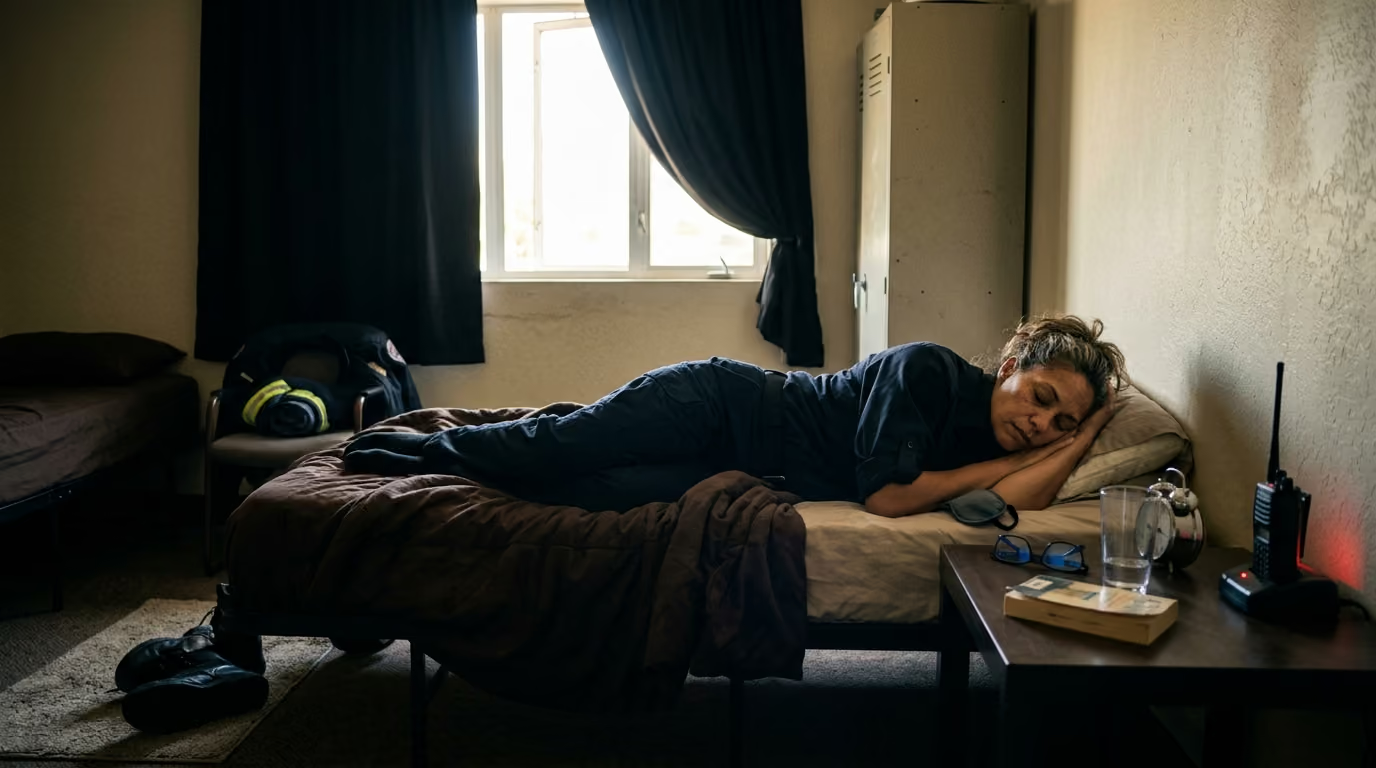

Bright workplace light boosts immediate alertness, but true shift recovery requires precisely timing your light exposure across shifts, commutes, and rest days.





Light management for shift workers is not a simple choice between bright light and dark rooms. It is a biological tool that targets two distinct systems: immediate wakefulness and long-term circadian timing. Light strategy is neither a quick cure for chronic sleep restriction nor a universal fix for poorly designed shift rotations. When used with an understanding of human physiology, deliberate light timing helps stabilize the body clock, reduce workplace sleepiness, and protect restorative sleep after duty.
This guide provides a comprehensive, research-backed framework for managing light across night shifts, transitions, commutes, and recovery days.
Light exposure affects the body in two primary ways: an acute alerting response that temporarily increases wakefulness, and a circadian phase-shifting response that moves the internal body clock earlier or later. Using light effectively requires matching the timing, intensity, and spectrum of light to your specific shift schedule and recovery goals. During night shifts, getting brighter light during the first half of the shift supports alertness and helps delay the body clock. Reducing light exposure during the second half of the shift, protecting the morning commute with appropriate safety precautions, and creating a dark home sleep environment improve subsequent sleep quality.
To manage light effectively, you must understand that feeling awake and shifting your internal clock are not the same biological process. Light entering the eyes hits specialized photosensitive retinal ganglion cells. These cells send signals directly to the suprachiasmatic nucleus, the master circadian pacemaker in the brain. This master clock coordinates daily rhythms in core body temperature, alertness, digestive function, and hormone production.
Light produces an acute alerting effect that occurs rapidly. When photons stimulate the retina, the brain suppresses the sleep-promoting hormone melatonin and increases physiological arousal. This response can reduce subjective sleepiness within minutes. However, acute alertness does not mean your internal clock has shifted to match your work hours. You can feel temporarily alert under bright workplace lighting while your underlying circadian physiology remains locked in a daytime orientation.
Circadian phase shifting describes the process of moving the entire 24-hour cycle forward or backward. Whether a light exposure shifts your clock earlier or later depends entirely on biological time, not the time on the wall clock. Biological time is determined by your internal circadian phase, marked by your core body temperature minimum and natural melatonin onset.
The relationship between light timing and circadian shifting is described by the phase-response curve. Light delivered in the early biological night, which corresponds to the evening or the start of a typical night shift, causes a phase delay. A phase delay shifts your body clock later, making it easier to stay awake late and sleep later into the following morning.
Light delivered in the late biological night or early biological morning causes a phase advance. A phase advance shifts your clock earlier, making your body want to wake up earlier and sleep earlier. If you are exposed to bright light at the wrong biological moment, you may inadvertently push your internal clock in the exact opposite direction of your intended sleep window.
Several physical variables determine the biological potency of any light exposure:
Melatonin suppression happens when light halts the synthesis of melatonin by the pineal gland. While melatonin suppression is necessary for staying awake during high-risk shift windows, suppressing it right before bedtime makes daytime sleep onset difficult. Managing light requires balancing the need for immediate alertness at work against the requirement for physiological sleep readiness when the shift ends.
Clinical investigations into light interventions for shift workers show consistent benefits for workplace alertness, while findings regarding sleep duration and quality remain more nuanced. Research demonstrates that light exposure is an effective countermeasure for shift-related sleepiness, but its success depends on strict adherence to proper timing and dosage.
A 2022 systematic review and meta-analysis examining 14 studies across seven countries demonstrated that structured lighting interventions significantly improved subjective and objective sleepiness among night-shift workers. The pooled analysis revealed a standardized mean difference of negative 0.57 in sleepiness scores. Blue-enriched white lighting showed particularly consistent results for maintaining cognitive performance and reducing attention lapses during overnight duties.
A separate meta-analysis evaluating dose-response relationships found a moderate overall effect of light therapy on alertness, reporting a pooled effect size of 0.429. This analysis identified an important operational distinction: moderate-intensity light applied for shorter periods effectively reduced acute nighttime sleepiness. Conversely, higher-intensity exposures delivered over longer durations were required to generate significant circadian phase shifts.
The effects of light interventions on daytime recovery sleep show positive trends in recent high-level evidence. A 2025 systematic review and meta-analysis found that targeted light therapy increased total daytime sleep duration by an average of 32.54 minutes in shift workers. The same analysis reported an average increase in sleep efficiency of 2.91 percentage points. Medium illuminance levels, ranging from 900 to 6,000 lux administered during the night shift, were associated with the largest gains in daytime sleep length.
Broader systematic reviews, including assessments by the Cochrane Collaboration, urge caution when interpreting lighting research. Many individual field trials suffer from small sample sizes, variable compliance, and inconsistent baseline lighting conditions. The American Academy of Sleep Medicine notes that while bright light reliably promotes work-time alertness and assists circadian phase adjustments, its ability to resolve chronic sleep deficits or replace lost sleep opportunity is limited.
The scientific consensus indicates that light therapy is probabilistic rather than deterministic. It improves the statistical likelihood of staying alert and sleeping better, but it does not guarantee complete biological adaptation. Light remains one component within a broader sleep management framework that must also account for schedule design, sleep opportunity, and personal recovery practices.
Applying laboratory lighting protocols to frontline shift work presents unique operational challenges. First responders, healthcare providers, and industrial operators rarely work under steady, controllable ambient lighting. Their work environments alternate rapidly between dark streets, illuminated station bays, computer terminals, and high-intensity scene lighting.
Emergency personnel experience abrupt physiological spikes caused by emergency dispatches and acute stress. An unexpected call at 03:00 releases catecholamines and cortisol, overriding normal circadian sleepiness through autonomic arousal. When combined with emergency vehicle warning lights and tactical scene illumination, field responders receive unpredictable bursts of light that can fragment their underlying circadian alignment.
Shift configurations also alter how light interacts with the circadian clock. A professional working a permanent night schedule has different biological goals than someone working rotating 12-hour shifts or 24-hour station rotations. To understand how schedule structures create cumulative sleep debt, review our guide to shift length and circadian timing.
On extended tours, responders often attempt to obtain split sleep or station naps between calls. Applying bright light during station downtime can inadvertently destroy the ability to nap when an operational lull occurs. Responders must also balance nocturnal illumination against chronic health markers. Long-term nighttime light exposure influences metabolic function, cellular recovery, and vascular strain, a relationship detailed in our review of nighttime light exposure and cardiovascular health.
Operational demands also include prolonged sedentary periods during vehicle patrols, punctuated by heavy physical exertion in protective gear. These environmental stressors compound neurological fatigue. Tactical and clinical personnel cannot simply wear blue-blocking glasses or dim their lighting if doing so impairs situational awareness, hazard recognition, or patient care. Light management must always yield to operational safety and mission execution.
To optimize alertness and protect subsequent sleep, light exposure should follow a structured timeline across the working hours. National safety guidelines, including recommendations from the National Institute for Occupational Safety and Health, suggest dividing the night shift into distinct lighting zones.
During the initial hours of a night shift, typically from 23:00 to 03:00, your biological objective is twofold: promote operational alertness and induce a circadian phase delay. Light exposure during this early window tells the suprachiasmatic nucleus that the day is continuing, pushing the internal clock later.
If you use dedicated light boxes, moderate sessions lasting 20 to 30 minutes during the first four hours of the shift can provide an alertness stimulus without causing excessive visual fatigue.
During the second half of the shift, typically from 03:00 to 07:00, the biological objective shifts toward sleep preparation. The body enters its deepest circadian trough between 04:00 and 06:00, during which core temperature drops and sleep pressure peaks. While you must maintain sufficient alertness for duty performance, high-intensity light exposure during this late window can cause unwanted phase advances.
This planned reduction preserves natural melatonin production, making it easier to initiate sleep once you transition off duty. To align this lighting taper with nutritional strategies that lower metabolic strain, see our practical guide on eating windows and circadian rhythms on night shifts.
Outdoor sunlight is significantly more potent than indoor lighting. Stepping into direct sunlight at 06:30 delivers an illuminance between 10,000 and 100,000 lux directly to your eyes. If you are completing a night shift and plan to sleep immediately, unattenuated morning sunlight will stimulate your circadian clock, signaling morning wakefulness and suppressing sleep propensity.
Keep outdoor duties during dawn transitions brief when possible. If your schedule requires working outside during sunrise, recognize that your circadian system will receive a strong phase-advancing signal. This makes returning to a daytime sleep schedule more challenging and requires stricter light restriction once you reach home.
The transition from the workplace to the bed represents the most vulnerable window for a shift worker. The commute combines accumulated sleep debt with variable environmental lighting, creating critical safety and physiological challenges.
A common piece of shift-work advice is to wear dark sunglasses on the drive home to prevent morning sunlight from reaching the retina. However, public health authorities, including the National Institute for Occupational Safety and Health, issue an explicit warning regarding this practice: If you are driving yourself home while experiencing severe sleepiness, do not wear dark sunglasses.
Wearing dark glasses removes the acute alerting effect of ambient daylight. In a fatigued driver, this reduction in visual stimulation can accelerate the onset of microsleeps and significantly increase the risk of a motor vehicle collision. Immediate transportation safety always supersedes circadian optimization.
Use the following decision rules for your morning commute:
To review institutional fatigue mitigation frameworks, read our analysis of CDC and NIOSH shift-work recovery baselines.
Once you arrive home, immediately eliminate light exposure to facilitate sleep initiation. The human visual system remains sensitive to domestic lighting, and even moderate room illumination can delay daytime sleep onset.
Implement the following controls in your home environment:
Creating a fully darkened sleep space signals the brain that biological night has arrived, regardless of daytime conditions outside. For a step-by-step breakdown of sleep planning across demanding schedules, consult our guide on building a shift-specific sleep plan.
Managing light on days off depends entirely on your shift schedule and the length of your break. Shift workers generally face a choice between two recovery approaches: maintaining a night-oriented biological schedule or switching back to a daytime routine.
This strategy is ideal for workers with short breaks between night shifts, such as one or two days off. Switching completely back to a daytime schedule causes circadian whiplash, forcing the body clock through repeated, destabilizing shifts.
This approach keeps your internal clock closer to your night-shift routine, reducing the fatigue experienced when your next shift block begins.
This approach is suited for workers with three or more consecutive days off who wish to align with family and social life.
Transitioning back to daytime hours requires decisive morning light signals to push the circadian clock earlier via phase advances.
For emergency professionals working rapidly rotating shifts or isolated overnight duties, full circadian adaptation is biologically impossible. In these scenarios, attempting to shift the master clock every few days creates severe internal misalignment.
Under rapid rotations, use light primarily as an acute alertness tool during working hours rather than an adaptation mechanism. Rely on moderate workplace lighting during high-risk shift windows, prioritize sleep opportunity whenever off duty, and use dark environments to protect whatever sleep windows are available.
Implementing a lighting strategy without understanding circadian physiology often leads to predictable mistakes. Avoiding these errors helps maintain duty performance while protecting long-term health.
Blasting bright light boxes or working under unshielded high-lux lamps during the final two hours of a night shift may help you finish paperwork, but it suppresses melatonin and disrupts subsequent daytime sleep. Taper your lighting exposure as the end of the shift approaches.
As emphasized by safety researchers, using dark glasses to block morning light during your drive home reduces visual alertness. If you are operating a motor vehicle, prioritize transportation safety and allow ambient light to assist your vigilance.
Feeling awake under bright lights does not mean your internal organs, digestive system, and hormonal pathways have shifted to night work. Do not rely on momentary alertness as an indicator that your body is fully adapted to nocturnal schedules.
Many workers believe that only sunlight or specialized medical devices affect circadian timing. In reality, spending hours under standard 300-lux fluorescent or LED lighting after prior dim exposure generates meaningful biological signals. Control all indoor light sources deliberately.
Light stimulates alertness through neurological pathways, but it cannot restore cellular function, clear metabolic waste from the brain, or replace lost slow-wave sleep. Using light therapy to push through severe, chronic sleep deprivation increases the risk of performance errors and health complications.
A protocol designed for a permanent night worker will fail if applied to someone on a rotating 24/48 schedule. Tailor your light management to your specific shift timing, rotation speed, and personal recovery goals.
While light is a non-pharmacological tool, manipulating light intensity and timing carries specific physical constraints and medical contraindications.
Individuals with specific eye conditions must exercise caution with bright light interventions. Retinal diseases, macular degeneration, glaucoma, and prior eye surgeries alter retinal vulnerability. People with these conditions should consult an ophthalmologist before using high-intensity light therapy devices.
Certain systemic medications increase photosensitivity. Common prescription drugs, including tetracycline antibiotics, specific antiarrhythmics, non-steroidal anti-inflammatory drugs, and psychiatric medications, make the eyes and skin unusually sensitive to light. Check your medication profiles for photosensitizing warnings.
Bright or flickering light sources can trigger acute migraine attacks or exacerbate tension headaches in susceptible individuals. If you experience light-induced headaches, avoid high-contrast lighting transitions and utilize broader, diffused light sources with warm color temperatures rather than concentrated blue-spectrum lamps.
Individuals with bipolar affective disorder or related mood conditions must use caution when manipulating circadian timing and bright light. Rapid shifts in light exposure can trigger hypomanic or manic episodes. Light protocols in these populations should only be implemented under the guidance of a qualified mental health clinician.
The human eye undergoes structural changes with age. The crystalline lens gradually yellows and thickens, reducing the transmission of short-wavelength blue light to the retina.
An older worker may require higher illuminance levels to achieve the same alertness or circadian-shifting response that a younger colleague experiences under lower light levels. Lighting strategies should be adjusted individually based on comfort, age, and subjective response.
In safety-sensitive environments involving emergency vehicle operation, tactical entry, or hazardous machinery, lighting changes must never compromise operational capability. Blue-depleted lighting should never be used if it degrades color discrimination needed for medical assessments, hazardous material identification, or instrument readings. Operational safety and environmental clarity remain paramount.
Light management resolves many operational challenges, but it cannot cure underlying, undiagnosed sleep disorders. Shift workers operate under heavy physiological strain and face elevated rates of chronic sleep disturbances that warrant professional clinical evaluation.
Consult a board-certified sleep specialist, occupational medicine physician, or primary care provider if you experience any of the following warning signs:
Clinical professionals can perform formal diagnostic evaluations, such as polysomnography or home sleep apnea testing, to assess your underlying sleep architecture. They can also help design structured, individualized circadian interventions that safely integrate light therapy, behavioural strategies, and occupational schedules.
Blue-blocking glasses filter short-wavelength light, protecting natural melatonin production. They are effective when worn before daytime sleep, such as while commuting as a passenger or relaxing at home. However, wearing them while driving home can increase drowsy-driving risks by reducing visual alertness. They should only be used in situations where acute alertness is not required for safety.
Alertness effects can occur at ordinary room-lighting levels of 100 to 200 lux if you have spent previous hours in dim settings. For structured circadian shifting or significant alertness improvements, research indicates that illuminance levels between 500 and 1,000 lux of blue-enriched light are generally more effective. Extremely bright setups above 5,000 lux are rarely necessary for basic shift-work alertness.
Using a commercial light box producing 2,500 to 10,000 lux can be effective if timed correctly. Limit exposure sessions to 20 to 30 minutes during the first four hours of your night shift. Do not place the box directly in your central line of vision; position it off to the side at an angle to avoid visual fatigue and glare while completing work tasks.
Waking up early during daytime recovery sleep is driven by circadian alerting signals. As the day progresses, your internal master clock raises core body temperature and releases cortisol, signaling your brain to wake up despite high sleep debt. Maintaining complete bedroom darkness, managing late-shift light exposure, and keeping your sleep environment cool helps extend these daytime sleep windows.
Deliberate light timing protects immediate operational alertness while preserving the physiological recovery necessary for a long, healthy career on shift work. By matching your light exposure to your operational goals and protecting your sleep environment, you turn an uncontrolled occupational hazard into a sustainable performance asset.
Stay connected for research-led guidance on duty fitness, shift-work sleep, injury recovery, stress, nutrition and career longevity. Practical ideas for first responders who want to stay capable on the job, recover well and protect their health for the long run.



Read practical guidance on first responder fitness, recovery, sleep, nutrition and resilience for demanding work and a long, active career.
read the blog



