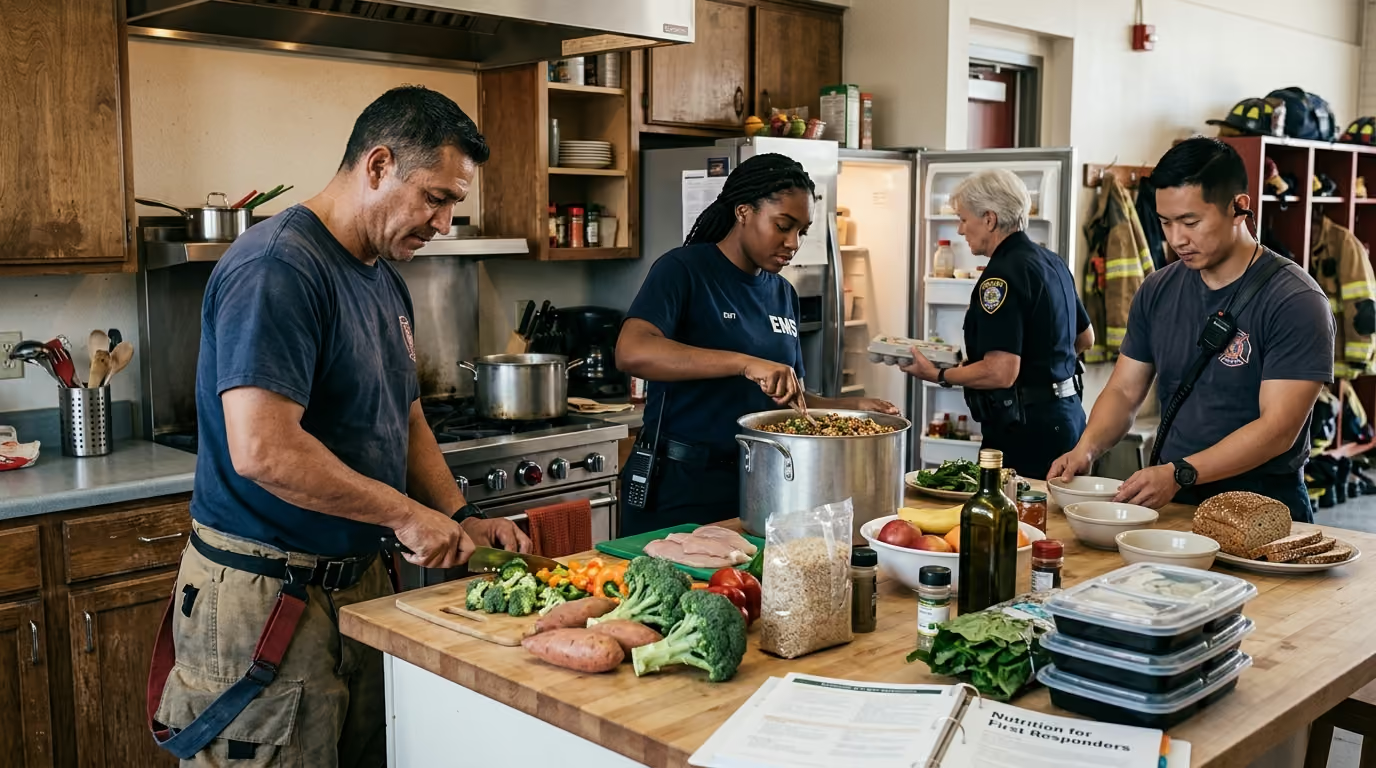

Long-term structural protection against demanding shift work is achieved by fueling bone, muscle, and connective tissues with precise macronutrient targets and proven recovery nutrients.





If you have ever searched for ways to protect your joints, stop chronic back stiffness, or rebuild strength after grueling shifts, you are familiar with the noise. The internet is filled with miracle joint powders, extreme elimination diets, and tactical supplement stacks promising total injury proofing.
Musculoskeletal resilience is the ability of your bones, muscles, tendons, and ligaments to repeatedly generate force, absorb mechanical impact, and recover from demanding physical duty across a full career. Nutrition cannot replace smart physical training or prevent every acute injury. It serves as the baseline supply chain that delivers amino acids, energy, and micronutrients to repair daily tissue microtrauma and sustain long-term structural health.
Meeting baseline energy needs, eating 1.4 to 2.0 grams of protein per kilogram of body mass daily, and maintaining adequate calcium and vitamin D levels form the core of structural durability. When combined with progressive resistance training and adequate sleep, these nutrition fundamentals protect lean mass, reinforce bone density, and support connective tissues through decades of operational stress.
First responder work places unique, asymmetric physical loads on the human body. Firefighters, paramedics, and law enforcement officers frequently lift heavy patients in cramped spaces, carry awkward equipment up stairwells, and wear heavy personal protective gear for hours. These physical tasks place massive cumulative stress on both active contractile tissues and passive structural frameworks.
Research shows that musculoskeletal trouble is an occupational reality across emergency services. A systematic review and meta-analysis found a 41 percent pooled prevalence of musculoskeletal disorders among firefighters. Lower-back disorders represented 31 percent of these cases, followed by lower-extremity issues at 16 percent, upper-extremity disorders at 13 percent, shoulder issues at 11 percent, and neck disorders at 9 percent. A separate comprehensive review showed firefighter injury rates ranging from 9 percent to 74 percent, with the lower back and lower extremities consistently ranking among the most frequent injury sites.
To understand how nutrition supports durability under these conditions, we must look at the musculoskeletal system as four linked tissues.
Bone is active, living tissue that constantly adapts to mechanical stress through remodeling. Specialized cells break down old bone matrix while other cells lay down new collagen and mineral structures. Nutrition provides the calcium, phosphorus, magnesium, and protein matrix required for this remodeling process.
A common mistake is treating bone health as solely a calcium issue. Bone remodeling requires adequate total energy, hormonal stability, vitamin D, and mechanical loading. Low energy intake or chronic hormonal disruption will weaken bone structure even if calcium intake seems adequate.
Muscle tissue generates dynamic force, stabilizes vulnerable joints, and absorbs sudden operational impacts. Maintaining functional muscle mass requires regular resistance exercise combined with sufficient dietary protein and total calories.
Protein alone cannot protect muscle if an officer or firefighter is in a severe caloric deficit. Without adequate total energy, the body breaks down muscle protein to meet baseline fuel requirements. This process reduces absolute strength, diminishes joint stability, and increases injury susceptibility during heavy physical calls.
Connective tissues transmit force from contracting muscles to bones and hold joints in proper alignment. These tissues consist primarily of collagen fibers organized within an extracellular matrix. Tendons and ligaments have lower blood supply and slower metabolic turnover rates than skeletal muscle.
Connective tissue repair responds primarily to progressive mechanical loading and adequate systemic nutrition. Specific collagen supplements are heavily marketed to tactical athletes, but current evidence does not support them as standalone fixes. Meeting total daily protein targets, consuming vitamin C, and following structured rehabilitation provide the true foundation for connective tissue repair.
Articular cartilage covers the ends of bones within synovial joints, creating smooth, low-friction movement. Like tendons, cartilage has a limited vascular network and relies on synovial fluid diffusion for nutrient delivery.
Because cartilage turnover is slow, the immediate post-exercise feeding models used for muscle protein synthesis do not apply to joint cartilage. Protecting joint cartilage over a long career requires managing total body mass, building surrounding muscle strength to absorb joint impact, and maintaining balanced systemic nutrition. High-cost joint supplements rarely solve structural problems caused by muscle weakness or mechanical overload.
A resilient musculoskeletal system requires a stable energy foundation. In exercise science, energy availability refers to the amount of dietary energy left for basic physiological functioning after accounting for the energy burned during exercise and occupational tasks.
Energy availability is calculated by subtracting exercise energy expenditure from total dietary energy intake, then dividing that remainder by fat-free mass. This concept differs from standard daily caloric balance. A responder might balance total calories over a full week yet spend multiple days in severe energy deficits due to long shifts, back-to-back calls, and missed meals.
Scientific frameworks classify energy availability into distinct operational categories:
First responders frequently experience low energy availability without realizing it. Extended fire ground operations, prolonged tactical standoffs, and back-to-back ambulance transports create massive energy expenditures. When responders pair these demands with intentional crash dieting, intermittent fasting on duty, or skipped station meals, the body enters an energy deficit.
Underfueling directly degrades musculoskeletal structures over time. When energy availability drops, the body suppresses muscle protein synthesis to conserve resources. This makes it difficult to repair exercise-induced muscle damage or build new functional tissue.
Bone health suffers significantly during extended energy deficits. Low energy availability alters circulating hormones such as estrogen, testosterone, thyroid hormone, and insulin-like growth factor 1. This hormonal shift slows down bone formation and accelerates bone resorption.
The International Olympic Committee highlights that low energy availability contributes directly to impaired bone mineral density and elevated bone-stress injury risk. Responders who chronically underfuel their shifts face higher risks of stress fractures, persistent tendon pain, and slow recoveries from minor duty strains. Establishing practical meal planning during extended shifts provides the baseline fuel required to keep structural tissues healthy.
Protein supplies the indispensable amino acids necessary for muscle repair, tendon remodeling, and bone matrix renewal. For active emergency personnel, standard baseline dietary guidelines often fall short of supporting tissue recovery under heavy physical loads.
The International Society of Sports Nutrition recommends an overall daily protein intake of 1.4 to 2.0 grams of protein per kilogram of body mass for exercising individuals. This range accommodates differences in training intensity, exercise mode, protein quality, and overall energy status.
Wildland firefighters working arduous multi-day assignments on fire lines have documented requirements ranging from 1.2 to 1.7 grams per kilogram daily alongside high carbohydrate intakes. Responders managing high training volumes, those in caloric deficits, or those recovering from musculoskeletal injuries benefit from staying toward the upper end of the 1.4 to 2.0 g/kg range.
For responders with higher body fat percentages, calculating protein needs based on total body weight can produce unnecessarily high targets. In these cases, basing intake on estimated lean mass or a healthy target body weight provides a practical daily number.
Total daily protein intake is the most critical variable, but protein distribution across the day also influences muscle tissue preservation. A common habit among emergency personnel is eating almost no protein during busy shifts, followed by a massive 80-gram protein meal before bed.
Muscle protein synthesis is stimulated most effectively when high-quality protein is distributed across three to five meals throughout the day. Each feeding should supply roughly 0.25 to 0.40 grams of protein per kilogram of body weight, typically translating to 25 to 45 grams of protein per meal. This steady distribution delivers recurring pulses of essential amino acids, particularly leucine, to trigger muscle repair mechanisms.
Protein quality is determined by amino acid profile and digestibility. Complete protein sources containing all indispensable amino acids include eggs, poultry, lean beef, fish, dairy, and soy. Plant-based diets can support duty performance and muscle health, but they require careful attention to total volume and varied sources to hit necessary amino acid thresholds.
When first responders seek to lose weight, protein intake becomes even more vital. Severe caloric deficits combined with inadequate protein cause significant losses in lean muscle tissue along with fat.
To protect structural integrity during fat loss, responders should use a moderate calorie deficit, maintain structured resistance training, and keep protein intake at 1.8 to 2.2 grams per kilogram of lean mass. Preserving functional muscle while shedding excess body fat reduces mechanical joint strain without sacrificing the physical capability needed on duty.
While protein builds structural tissue, carbohydrates and dietary fats provide the fuel required to perform duty tasks and spare structural proteins from being burned for basic energy.
Carbohydrate intake directly affects operational readiness and musculoskeletal safety. Firefighting, patient extrications, and tactical operations rely heavily on anaerobic glycolysis and rapid glycogen breakdown. When muscle glycogen stores are depleted, physical power drops, fatigue sets in, and movement mechanics break down. Fatigue-induced technique breakdown is a primary contributor to acute back and joint sprains during emergency calls.
Published guidelines for wildland firefighters during arduous suppression operations recommend 6 to 10 grams of carbohydrate per kilogram of body mass per day. A typical urban station shift with mixed call volumes does not require such high numbers. However, completely eliminating carbohydrates impairs physical performance during high-intensity calls.
Carbohydrate timing around demanding work supports muscle recovery and replenishes glycogen stores. Excellent carbohydrate sources include oats, potatoes, rice, whole grains, fruit, and beans. During extended emergency incidents where solid meals are delayed, easily digested carbohydrates such as fruit purees, low-fat chocolate milk, or electrolyte-carbohydrate sports beverages keep blood glucose stable and protect muscle tissue from catabolism.
Dietary fats supply essential fatty acids, support cell membrane integrity, and allow the absorption of fat-soluble vitamins critical for bone health, including vitamins A, D, E, and K. Fat intake should generally account for 20 to 35 percent of total daily calories.
Responders should prioritize unsaturated fats from sources like olive oil, avocados, nuts, seeds, and cold-water fish. Saturated fats should be balanced within standard dietary guidelines, avoiding overly greasy fast foods that cause digestive issues during sudden emergency responses.
Fat is energy-dense, making it a valuable tool for personnel who struggle to maintain body weight during grueling operations. However, large, high-fat meals slow down digestion. Consuming heavy, high-fat meals right before a workout or during active call windows can lead to gastrointestinal distress and sluggishness when the alarm drops.
Skeletal strength and joint resilience depend on a steady supply of micronutrients. Calcium and vitamin D form the foundation of mineralized bone tissue and neuromuscular function.
Calcium provides the structural rigidity of bone matrix and plays a vital role in muscle contractions and nerve signaling. The National Institutes of Health established dietary reference intakes for calcium:
The tolerable upper intake level for calcium is 2,500 milligrams per day for adults aged 19 to 50, and 2,000 milligrams per day for adults 51 and older. Exceeding these limits through excessive supplementation can cause kidney stones and vascular calcification without offering extra bone benefits.
A food-first approach to calcium is recommended because calcium-rich dairy and fortified foods also deliver protein and essential minerals. Responders should evaluate their baseline dietary calcium before considering supplements.
Vitamin D acts as a secosteroid hormone that regulates calcium absorption in the gut and supports bone mineralization. Without adequate vitamin D, the body absorbs only a fraction of dietary calcium, pulling minerals from bones to maintain serum calcium levels.
The National Institutes of Health recommends 600 International Units (IU) daily for adults up to age 70, and 800 IU daily for adults over 70. The tolerable upper intake level is 4,000 IU daily for adults unless higher short-term doses are prescribed by a physician to treat clinical deficiency.
First responders face distinct occupational risks for vitamin D deficiency. Night-shift schedules, long hours indoors, sleeping during daylight hours, and wearing heavy personal protective gear reduce cutaneous vitamin D synthesis from sunlight. Research cited by the International Olympic Committee indicates that serum 25-hydroxyvitamin D concentrations below 30 nanograms per milliliter (ng/mL) are associated with higher rates of bone-stress injuries in active populations.
Responders working rotating night shifts should consider having their 25-hydroxyvitamin D levels checked during routine physicals. Indiscriminate megadosing of vitamin D is unnecessary and unsafe. Targeted supplementation should be guided by objective blood tests and medical supervision.
Marketing campaigns frequently claim that collagen peptides or gelatin powders rebuild worn cartilage and repair torn ligaments. Collagen synthesis requires amino acids such as glycine, proline, and hydroxyproline, along with vitamin C as an enzymatic cofactor.
Some clinical studies suggest that consuming 10 to 15 grams of hydrolyzed collagen or gelatin alongside 50 milligrams of vitamin C roughly 45 to 60 minutes before loading exercises can increase circulating amino acids and support tendon collagen synthesis.
However, evidence for collagen as an isolated joint cure remains preliminary. Collagen cannot overcome the structural consequences of chronic underfueling, inadequate total protein, or poor training loads. Collagen supplementation should be viewed as an optional secondary tactic behind a high-protein diet, vitamin C-rich fruits and vegetables, and progressive physical rehabilitation.
Supplements should never replace foundational nutrition, but certain evidence-backed options can support training capacity, lean tissue preservation, and recovery.
Creatine monohydrate is one of the most thoroughly researched and effective sports nutrition supplements available. It increases intramuscular phosphocreatine stores, accelerating the resynthesis of adenosine triphosphate (ATP) during high-intensity, short-duration activities such as sprinting, lifting, and heavy dragging.
Beyond immediate energy production, creatine supports musculoskeletal durability. A meta-analysis in healthy adults under 50 years of age demonstrated that combining creatine with resistance training increased upper-body strength by an average of 4.43 kilograms and lower-body strength by 11.35 kilograms compared to resistance training alone.
Creatine provides measurable structural benefits for aging personnel as well. In a meta-analysis of older adults, creatine combined with resistance training produced roughly 1.4 kilograms greater lean tissue gain than a placebo combined with training, alongside meaningful strength improvements.
Creatine does not cause kidney damage in individuals with healthy baseline renal function. Responders should choose third-party tested products (such as NSF Certified for Sport or Informed Choice) to ensure purity and prevent accidental ingestion of banned contaminants.
Protein powders are convenient shelf-stable foods rather than muscle-building drugs. Whey protein, casein, and blended plant proteins (such as pea and rice combinations) provide rapid, portable amino acids when station schedules prevent cooking a full meal.
Powders are practical tools for hitting daily protein numbers during busy shifts, long ambulance transfers, or immediately following station workouts. They should supplement whole-food meals rather than entirely replace nutrient-dense meats, fish, eggs, dairy, and legumes.
Omega-3 polyunsaturated fatty acids, particularly eicosapentaenoic acid (EPA) and docosahexaenoic acid (DHA) found in fatty fish, play a role in resolving systemic inflammation and supporting muscle protein synthesis sensitivity.
While omega-3 fatty acids offer clear cardiovascular and general health benefits, evidence does not support them as standalone treatments for acute joint tears or tendon injuries. Eating two servings of fatty fish weekly (such as salmon, mackerel, or sardines) or taking a modest, third-party tested fish oil supplement provides solid baseline support.
A first responder's nutritional needs change across a 25- to 30-year career. A fueling strategy that worked during a recruit academy will rarely match the physiological needs of a senior officer or seasoned fire captain.
The early career phase centers on building bone density, increasing functional lean mass, and establishing sustainable shift-prep habits. New responders often fall into the trap of severe cutting diets to meet aesthetic goals, or relying entirely on fast food during unpredictable field training.
Early priorities include:
Mid-career responders face accumulated microtrauma, old joint injuries, and years of disrupted circadian rhythms. Metabolism often slows due to changes in physical activity outside of work, while family responsibilities and overtime shifts create higher baseline stress.
Mid-career priorities include:
Aging muscle tissue experiences anabolic resistance, meaning it requires a stronger amino acid signal and greater mechanical loading to trigger muscle protein synthesis. At the same time, bone mineral density declines, increasing the risk of osteopenia or fractures from duty falls.
Research shows that older adults generally need at least 1.2 grams of high-quality protein per kilogram of body weight daily, combined with resistance training, to stimulate muscle protein synthesis and prevent sarcopenia. A 2025 network meta-analysis confirmed that protein supplementation combined with resistance training significantly improved muscle mass and strength in older adults compared to resistance training alone.
Late-career priorities include:
Translating nutritional science into real-world emergency service requires practical frameworks that survive call interruptions, poor sleep, and limited refrigeration.
Station life requires durable, portable meals that can be consumed quickly or stored safely if the tones drop mid-bite.
Wildland fire assignments, extended search and rescue operations, and multi-day natural disaster deployments present extreme energetic challenges. Field personnel often expend 4,000 to 6,000 calories daily while carrying heavy packs across rough terrain in high ambient heat.
Under these conditions, nutritional priorities shift toward sheer caloric density, high carbohydrate availability, and electrolyte replacement. Field rations must be shelf-stable, compact, and resistant to extreme temperatures.
When a responder is sidelined by a rotator cuff strain, knee meniscus tear, or lumbar disc herniation, their instinct is often to drastically slash calorie intake to prevent weight gain. While energy requirements decrease due to reduced physical training, aggressive underfueling starves injured tissues of the resources needed to heal.
Rehabilitation nutrition requires a balanced approach:
Nutrition is a powerful support system, but it operates within strict biological and physical limits. It cannot overcome excessive workload, bad lifting mechanics, inadequate equipment, or chronic sleep deprivation.
First responders should remain skeptical of extreme dietary claims that promise injury immunity:
While general sports nutrition principles apply broadly, persistent physical symptoms or underlying health conditions require personalized medical assessment. Responders should seek professional guidance from licensed healthcare providers under the following circumstances:
Musculoskeletal longevity across an emergency services career is built through the daily alignment of adequate calories, sufficient protein, essential micronutrients, structured strength training, and dedicated recovery.
Stay connected for research-led guidance on duty fitness, shift-work sleep, injury recovery, stress, nutrition and career longevity. Practical ideas for first responders who want to stay capable on the job, recover well and protect their health for the long run.



Read practical guidance on first responder fitness, recovery, sleep, nutrition and resilience for demanding work and a long, active career.
read the blog



