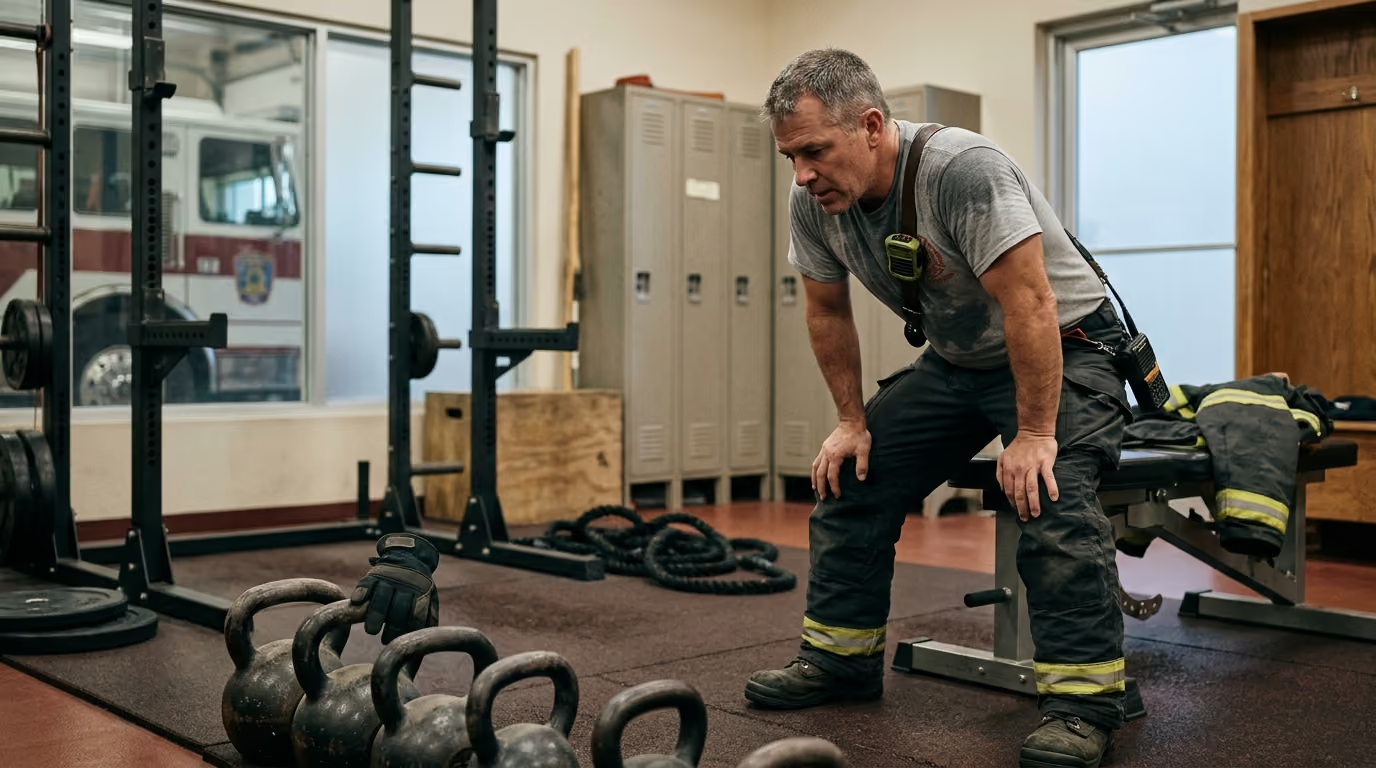

First responder training balances strength and endurance work against shift stress to protect long-term hormonal health and operational readiness on duty.





You finish a twenty-four-hour shift with four interrupted hours of sleep, heavy legs from carrying gear up stairwells, and a lingering sense of mental fatigue. You walk into the station gym or your garage, look at the barbell, and ask yourself a familiar question. Should you lift heavy to build strength, push through high-intensity intervals to maintain conditioning, or perform an easy aerobic recovery session? Popular fitness culture often suggests that intense resistance training optimizes testosterone and hard conditioning keeps you tactical. In reality, demanding shifts and cumulative fatigue alter how your body responds to exercise stress.
Understanding how strength training, endurance work, high-intensity intervals, and mixed-modal conditioning affect your endocrine system allows you to build physical capability without driving yourself into chronic exhaustion.
A first responder’s hormonal health depends far more on total recovery, sleep, and nutrition than on chasing temporary hormone spikes from specific workouts. Resistance exercise builds critical force capacity, while low-intensity aerobic work develops cardiovascular stamina and speeds up recovery between operational calls. High-intensity intervals and metabolic circuits provide time-efficient conditioning, but they carry a high autonomic and recovery cost. Balancing these training modes requires treating training, shift work, sleep loss, and call volume as a single shared stress budget.
Managing this stress budget protects resting testosterone, maintains healthy cortisol rhythms, and preserves job readiness across a long career.
Research examining exercise endocrinology shows that physical training alters hormones dynamically based on volume, intensity, duration, and baseline recovery. Hormones such as testosterone and cortisol do not function as simple switches for muscle growth or breakdown. Instead, they operate as context-dependent chemical messengers that regulate energy delivery, tissue remodeling, immune response, and neurological adaptation.
Resistance training uses external loads to improve force production, tendon resilience, and muscular hypertrophy. For emergency personnel, strength serves as physical armor against the demands of dragging hose lines, lifting patients, or wearing heavy protective equipment.
Lifting heavy loads with large muscle groups causes a temporary rise in circulating testosterone and growth factors immediately following a session. A meta-analysis published in Sports Medicine examining resistance and endurance exercise confirmed that resistance training reliably produces an acute increase in post-exercise testosterone. However, the same analysis demonstrated that exercise training does not systematically raise resting baseline testosterone over extended periods.
Resistance exercise also elevates cortisol, particularly when workouts feature short rest periods, high training volumes, or repeated sets taken to muscular failure. These temporary endocrine elevations serve a biological purpose. Acute cortisol mobilizes fuel substrates, while acute testosterone and growth hormone assist in cellular signaling for muscular repair. Chasing these temporary post-workout spikes is unnecessary because baseline health and long-term tissue adaptation matter far more for physical capability.
Endurance training develops the aerobic base needed to sustain submaximal physical tasks, clear metabolic byproducts, and recover between high-intensity operational bouts. This includes running, cycling, rowing, rucking, swimming, and continuous stair climbing.
The hormonal effect of endurance exercise depends heavily on the volume and intensity applied. A single session of moderate aerobic exercise can induce a mild, temporary rise in testosterone. In contrast, prolonged or high-volume endurance training performed without sufficient calories or rest can lead to lower resting testosterone and elevated baseline cortisol. A study evaluating hormone dynamics following exhaustive endurance work observed an inverse relationship during recovery, where cortisol concentrations climbed while free testosterone concentrations fell.
A comprehensive meta-analysis of exercise interventions found no universal, long-term suppressive effect of moderate endurance training on testosterone, cortisol, or sex hormone-binding globulin. Endurance training becomes hormonally suppressive primarily when it is paired with chronic sleep restriction, caloric deficits, and high job stress. For emergency responders, low-intensity steady-state conditioning remains an effective tool that supports cardiovascular health without imposing heavy recovery penalties.
High-intensity interval training (HIIT) alternates short periods of near-maximal effort with defined recovery windows. HIIT is widely used in tactical fitness programs because it builds glycolytic capacity and anaerobic threshold in brief training sessions.
While HIIT saves time on the clock, it carries a heavy physiological price tag. Interval training places substantial demands on the central nervous system, depletes glycogen stores rapidly, and stimulates high sympathetic nervous system activity. Combining intense intervals with heavy resistance training, sleep deprivation, or operational heat exposure can quickly overload the hypothalamic-pituitary-adrenal axis.
HIIT should be classified as a high-cost training input rather than an everyday conditioning method. When responders treat every conditioning session as a near-maximal interval test, systemic fatigue accumulates rapidly. Two focused interval sessions per week provide robust cardiovascular adaptations without draining the energy needed for emergency responses.
Mixed-modal conditioning blends multiple movement patterns and energy systems within a single workout. Examples include circuits pairing kettlebell swings with rowing, sled pushes with burpees, or hose drags with stair climbing.
These circuits mimic the physical demands of emergency tasks, but they frequently blur the physiological lines between strength, conditioning, and recovery. A circuit that pairs heavy deadlifts with sprint intervals places intense mechanical load on muscles while demanding maximal cardiac output. Physiologically, the body processes this as both a demanding resistance session and an exhaustive glycolytic workout.
Responders should classify mixed-modal sessions by their true physiological stress rather than marketing labels. When designing a program, a heavy mixed-modal circuit must be accounted for as a primary strength-power and interval session, not as an easy conditioning day.
First responders cannot specialize solely in strength or endurance. They must possess both qualities simultaneously, a reality that requires concurrent training.
A systematic review published in Sports Medicine found that combining heavy resistance training and endurance work within the same cycle can blunt lower-body strength and power adaptations in males, while females showed greater resistance to this interference. This interference effect does not mean that strength and endurance cannot be built together. It demonstrates that training order, volume distribution, and recovery spacing must be managed carefully.
Research on exercise sequencing shows that training order does not significantly impair long-term aerobic endurance or muscle hypertrophy. However, placing strength training before endurance work is superior for developing explosive power, neuromuscular coordination, and maximal force. Structuring concurrent training properly protects your strength gains while preserving aerobic capacity.
Emergency service work introduces physical, psychological, and environmental variables that standard athletic training models ignore. A training routine that functions perfectly for a corporate worker with a predictable sleep schedule can lead to hormonal disruption and chronic fatigue in a first responder.
Shift work disrupts the body's internal master clock, the suprachiasmatic nucleus, which governs circadian rhythms. A healthy endocrine system produces a sharp rise in cortisol shortly after waking, followed by a steady decline across the day, reaching its lowest point around midnight. Night shifts, rotating schedules, and early morning alarms flatten this daily cortisol slope, leading to elevated nighttime cortisol and blunted morning arousal.
A scoping review published in Sleep Medicine Reviews highlighted that irregular shift work alters the cortisol awakening response and creates chronic low-grade endocrine strain. Furthermore, a meta-analysis published in the Journal of Global Health estimated that approximately 31 percent of emergency medical personnel experience shift work disorder. The same analysis reported that nearly 30 percent suffer from obstructive sleep apnea and 28 percent experience chronic insomnia.
When training stress is layered on top of untreated sleep disorders and circadian disruption, the endocrine system struggles to recover. Managing your training load according to circadian-aware shift strategies helps mitigate these physiological conflicts.
The physical stress of emergency operations combined with sleep restriction causes immediate hormonal disturbances. In a study published in the Journal of Strength and Conditioning Research, researchers evaluated firefighters during a simulated three-day deployment. Firefighters restricted to a four-hour sleep window exhibited higher total daily cortisol exposure and elevated afternoon and evening cortisol compared to those given an eight-hour sleep opportunity.
Even more pronounced changes occur during prolonged high-stress operational exercises. Research examining firefighter cadets during a nine-day field training exercise involving heavy physical labor and restricted sleep revealed severe endocrine disruption. The cadets experienced significant reductions in circulating testosterone and insulin-like growth factor 1 (IGF-1), alongside sharp increases in resting cortisol and growth hormone.
These physiological alterations led to measurable drops in both physical strength and cognitive decision-making performance. When occupational stress peaks, adding exhausting workouts will not build mental toughness. It simply accelerates physical breakdown.
Your endocrine system does not separate physical training from workplace stress, emotional conflict, environmental heat, or sleep loss. All stressors draw from a single, shared physiological budget.
Testosterone supports muscle protein synthesis, bone mineral density, red blood cell production, mood stability, and cognitive drive. In healthy individuals, resting testosterone varies according to age, sleep quality, nutritional intake, and systemic stress.
It is vital to distinguish between a temporary post-workout hormone change and resting basal testosterone. A temporary post-exercise rise in testosterone does not indicate that your baseline hormone levels have increased permanently. Conversely, a temporary drop in testosterone following an exhausting twenty-four-hour shift does not mean you have developed clinical hypogonadism.
True clinical hypogonadism requires persistent symptoms alongside repeated, confirmed fasting blood tests interpreted by a qualified physician. Training-associated hormone suppression is usually reversible by correcting energy deficits, improving sleep hygiene, and managing training volume.
Cortisol regulates glucose metabolism, modulates immune system activity, manages blood pressure, and helps you respond to acute threats. The sudden release of cortisol during an emergency callout is an essential survival response, not a pathology.
Problems arise when systemic stress remains chronically high without recovery windows, leading to an altered diurnal rhythm. Some strength coaches attempt to use the testosterone-to-cortisol (T:C) ratio as an absolute test for overtraining. However, the joint consensus statement by the European College of Sport Science (ECSS) and the American College of Sports Medicine (ACSM) clearly states that the T:C ratio reflects physiological strain rather than a clinical diagnosis of overtraining syndrome.
A shifting T:C ratio simply tells you that your body is processing a heavy physical or psychological load. It should be used as a signal to modify training volume rather than a reason to panic.
Energy availability represents the amount of dietary energy remaining for essential biological functions after subtracting the energy expended during exercise. When energy availability falls too low, the body downregulates reproductive and metabolic hormone production to conserve fuel for immediate survival.
According to research published in the Journal of Sports Sciences, male endurance athletes whose energy availability dropped below 30 kilocalories per kilogram of fat-free mass per day for just five consecutive days experienced significant endocrine disruptions. These included increased resting cortisol, decreased active thyroid hormone (triiodothyronine), reduced luteinizing hormone, lower resting blood glucose, and impaired bone turnover markers.
The International Olympic Committee's consensus statement on Relative Energy Deficiency in Sport (REDs) notes that chronic low energy availability damages metabolic rate, immunity, protein synthesis, and cardiovascular health. Responders who add conditioning sessions while restricting food intake to lean down often create an endocrine deficit that impairs both duty performance and body composition.
Balancing strength, conditioning, and hormone health requires an adaptable programming structure. You can maintain job-ready capability across a thirty-year career by organizing training into distinct stress categories and matching workouts to real-world readiness.
Rather than forcing yourself through a rigid training calendar, use a daily readiness check to select the right workout intensity. Responders can apply an autoregulated training framework to guide session volume based on physical readiness.
When combining strength and conditioning, exercise order dictates physical adaptations and metabolic fatigue.
This template illustrates a sustainable training week for an emergency responder on a standard schedule. The schedule adapts readily using the training decision tree model.
When working overnight shifts or experiencing high call volume, structured workouts must bend to operational demands. Attempting to hit personal records on compound lifts after an exhausting shift increases your risk of musculoskeletal injury and suppresses neuroendocrine recovery.
Use a minimum effective dose training strategy during demanding shift cycles. Reducing total training volume by 40 to 50 percent while maintaining moderate intensity allows you to preserve your physical strength and muscle mass without overloading an already stressed nervous system.
Supplements and advanced recovery modalities cannot overcome poor nutrition, inadequate hydration, and chronic sleep restriction. Hormonal optimization is built upon basic lifestyle habits executed consistently.
Sleep is the primary window for growth hormone release, muscle protein synthesis, and nervous system restoration. Shift workers must take active steps to protect their sleep opportunities.
Eating adequately prevents low energy availability and supports endocrine balance during demanding operational shifts. Following a structured shift nutrition framework provides predictable energy without digestive distress.
A deload is a planned, temporary reduction in training stress designed to clear accumulated fatigue before performance drops.
Schedule a deload week every four to eight weeks, depending on your shift intensity and call volume. During a deload, reduce total training sets by 30 to 50 percent, avoid all sets to muscular failure, and replace high-intensity interval conditioning with low-intensity aerobic exercise. Deloading allows connective tissues to remodel, restores autonomic balance, and keeps your hormonal stress budget in equilibrium.
Endocrine physiology is frequently oversimplified in fitness media. Dispelling these common myths helps you build a more sustainable, evidence-based approach to career-long training.
Many fitness programs claim that specific exercises or short rest intervals maximize muscle growth by boosting post-exercise testosterone. While large-muscle resistance training produces an immediate, transient spike in testosterone and growth hormone, studies show these brief spikes correlate poorly with long-term muscle hypertrophy and strength gains. Progressive overload, total training volume, protein intake, and recovery drive long-term adaptation, not temporary post-workout hormone surges.
The idea that all endurance training causes muscle loss and suppresses testosterone is unsupported by exercise literature. While extreme, under-fueled ultramarathon running can impair reproductive hormones, moderate-intensity aerobic training improves capillary density, mitochondrial function, and heart rate recovery. These adaptations improve your ability to clear metabolic fatigue between calls, supporting overall recovery without harming hormone levels.
Marketing for dietary supplements often labels cortisol as an enemy that causes belly fat and muscle loss. Cortisol is essential for waking up, regulating blood pressure, mobilizing fuel during exercise, and controlling inflammation. The goal of physical training is not to eliminate cortisol, but to preserve a healthy diurnal rhythm where cortisol rises sharply in the morning and drops efficiently in the evening.
Emergency scenes demand sudden, all-out physical effort under chaotic conditions. This leads some responders to believe that every gym workout must push them to vomiting or complete physical failure. The job already provides unpredictable, high-stress exposure. Gym training should build physical reserves and resilience, not add to systemic exhaustion.
A well-designed physical training program builds durability, but it cannot fix severe medical conditions, unmanaged endocrine disorders, or clinical sleep pathologies. First responders must recognize the boundaries of exercise programming and know when to seek medical evaluation.
Never attempt heavy resistance training or maximal conditioning under the following conditions:
If these warning signs appear, substitute light mobility, low-intensity walking, or complete rest. Training through acute illness or extreme sleep debt raises your risk of cardiovascular events, rhabdomyolysis, and musculoskeletal injury.
It is essential to distinguish between normal exercise fatigue and serious systemic overtraining:
Consult a licensed healthcare professional, such as a primary care physician or board-certified endocrinologist, if you experience persistent red-flag symptoms that do not resolve with rest:
A physician can order comprehensive blood panels, evaluate thyroid hormones, screen for sleep apnea, assess metabolic markers, and rule out underlying medical conditions. Self-prescribing unregulated testosterone boosters, high-dose cortisol blockers, or hormone replacement therapies without medical supervision carries serious health risks.
Revisit this framework whenever your shift schedule changes, when preparing for an operational fitness test, or if you notice early signs of chronic fatigue and stalled training progress. Returning to these stress-budgeting principles will help you adjust your workout volume, protect your sleep, and keep your endocrine system balanced through every phase of your emergency services career.
Building sustainable physical capability requires balancing smart strength training, aerobic base work, and adequate recovery to protect your health on duty and long into retirement.
Stay connected for research-led guidance on duty fitness, shift-work sleep, injury recovery, stress, nutrition and career longevity. Practical ideas for first responders who want to stay capable on the job, recover well and protect their health for the long run.



Read practical guidance on first responder fitness, recovery, sleep, nutrition and resilience for demanding work and a long, active career.
read the blog



