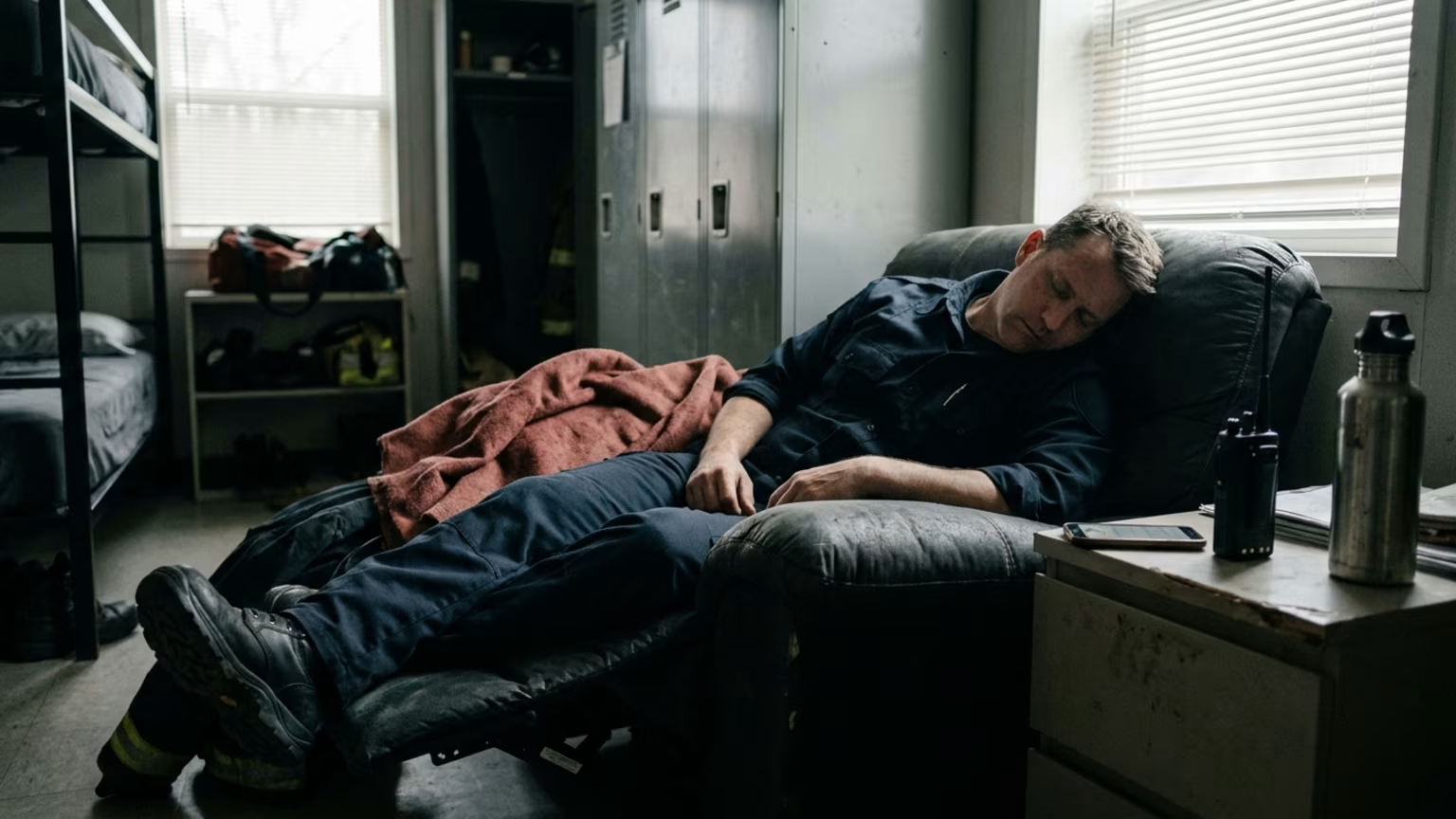

Plan naps around night shifts with evidence-aware guidance on sleep opportunities, wake-up grogginess and why naps do not replace recovery sleep.





How should first responders plan naps around night shifts? Protect adequate sleep before and after duty, use planned naps as a possible alertness aid when operations permit, and account for grogginess after waking.
A JEMS summary of NASEMSO/NHTSA fatigue-management guidance describes brief naps of about 20 to 30 minutes as a possible way to improve alertness in shift workers. The useful distinction is between supporting alertness and eliminating fatigue. The summary presents napping as one part of fatigue management rather than a replacement for sufficient sleep.
Waking introduces a separate concern: sleep inertia. A first-responder-focused account describes this as impaired attention and vigilance after waking. It reports a common period of 15 to 30 minutes and says no countermeasure has been shown to eliminate it in the first 15 minutes.
That creates a planning problem. A sleep opportunity and the transition back to work both deserve consideration. A plan that makes room for a nap but assumes immediate full alertness on waking leaves out the very impairment described in that account.
The EMS recommendations come through the JEMS summary rather than an independent assessment of the full guideline paper. The sleep-inertia figures come from secondary reporting rather than a primary study. Treat those figures as planning context, not a guaranteed recovery time or a promise that a short nap prevents grogginess.
The material does not establish a single best schedule for every responder or provide robust comparisons of nap durations and post-nap performance. The guidance is also EMS-focused. Its application to other emergency-service roles needs to respect differences in duties and operating conditions.
Make nap opportunities part of an explicit fatigue-management approach rather than an informal workaround. The JEMS summary places on-duty naps alongside fatigue monitoring and education. It also lists shifts shorter than 24 hours and access to caffeine as organizational measures.
Those recommendations shift the discussion away from whether an individual can simply tolerate more tiredness. They put attention on the conditions in which people are expected to work. A nap is one option within that system rather than the system itself.
A practical agency discussion can stay close to the supported measures:
Call demand still matters. The first-responder-focused account describes overnight fire/EMS sleep as fragmented into blocks between calls. That is descriptive reporting rather than a finding about every department. Its practical relevance is straightforward: a planned opportunity and completed sleep are not interchangeable.
For more context on that distinction, Rescuris’s guide to fitting naps into a broader recovery plan addresses napping as part of recovery rather than a stand-alone answer.
Organize the plan around opportunities for sleep and the demands that follow waking. The practical implications of the JEMS guidance support protecting sleep before duty, permitting naps during duty where feasible, and prioritizing recovery afterward. That is a flexible sequence rather than a fixed timetable.
The starting point is an opportunity for adequate sleep. A pre-shift nap may be considered when the schedule and personal circumstances allow. It belongs alongside that main sleep opportunity rather than taking its place.
For planning purposes, separate two questions: what opportunity exists for sufficient sleep and whether an additional nap can fit before work. That distinction keeps a short alertness measure from becoming the entire preparation strategy. It also avoids making a nap the assumed answer whenever the main sleep opportunity has been squeezed.
This is not a requirement to sleep on command. The useful task is to identify the available opportunity without treating a missed nap as a personal failure or a completed nap as proof of readiness.
The JEMS summary recommends making on-duty nap opportunities available. Whether an opportunity can be used depends on the operational setting. Staffing and agency policy belong in that discussion alongside call demands.
The account of fragmented overnight fire/EMS sleep helps explain why the plan needs flexibility. Calls can interrupt an available rest period. Editorially, the distinction to preserve is between making sleep possible and claiming that a nominal rest window delivered enough sleep.
An interrupted opportunity should therefore remain part of the fatigue discussion. It should not disappear from consideration simply because time had been set aside for rest. This follows the guidance’s emphasis on assessing fatigue rather than assuming that the schedule tells the whole story.
When operations allow, build a transition between waking and safety-sensitive work. That practical implication follows from the reported impairment in attention and vigilance after sleep. The transition belongs in discussions about nap access from the outset.
This matters when deciding what an agency means by a nap opportunity. Permission to sleep addresses access to rest. Accounting for the waking period addresses the return to work. Both deserve attention even when unpredictable calls make the second part difficult to accommodate.
The evidence supports recognizing the issue. It does not supply a universal clearance test for deciding that an individual is ready for every task. Personal fitness-for-duty concerns belong with the appropriate occupational-health or qualified clinical professional rather than a generic nap formula.
After the shift, the priority is a genuine opportunity for recovery sleep. The research supports naps as a countermeasure but does not establish that they erase accumulated sleep loss. A useful nap during duty does not cancel the need for sleep afterward.
Keep the post-shift question separate from the on-duty question. During duty, the aim is to manage fatigue within operational constraints. After duty, the aim is to protect recovery rather than assume that a brief rest has settled the sleep problem.
This distinction also respects the responder whose planned nap never happened. Recovery planning should reflect the sleep opportunity actually available rather than the one that appeared possible before the shift began.
The sources address alertness and fatigue management rather than health outcomes after retirement. They do not establish that a particular nap schedule prevents later disease or preserves long-term physical capability. The retirement relevance is therefore a planning principle rather than a demonstrated benefit of one nap protocol.
That principle is to keep recovery visible across a career. A nap should not become the justification for repeatedly overlooking adequate sleep. Equally, an interrupted or unavailable nap should not be framed as a failure of discipline when access depends partly on how work is organized.
For active personnel, the useful question is whether nap opportunities sit alongside recovery or are being asked to substitute for it. For someone leaving service, the discussion can shift toward how rest fits the capability and activity they want to retain. Neither question is resolved by selecting a precise nap duration.
A career-wide view of physical capability provides a broader planning frame. In Rescuris’s editorial approach, duty fitness and recovery belong in the same conversation as long-term health. That keeps the purpose of a nap proportionate: a possible alertness aid within a much larger recovery picture.
The next useful topic is how shift design affects the opportunity to recover. A personal nap plan addresses one part of a duty period. The JEMS guidance also directs attention to fatigue monitoring and shift length, which puts organizational decisions beside individual sleep habits.
Rescuris’s discussion of shift length and recovery opportunities is a relevant next read. The practical question to carry forward is whether the work schedule allows the sleep plan to happen. That is a more useful follow-up than searching for an exact nap length that is expected to compensate for every schedule.
Planning rest during duty involves responders and the teams arranging their work; Rescuris places those decisions within research-led coverage of sleep and physical recovery. Its guidance addresses accumulated wear alongside readiness so that emergency-service professionals can weigh practical options without making exhaustion a standard of commitment.
Rescuris publishes evidence-aware guidance for firefighters, police officers, paramedics and other first responders on fitness, recovery, sleep, nutrition, stress resilience and long-term capability.





Read practical guidance on first responder fitness, recovery, sleep, nutrition and resilience for demanding work and a long, active career.
read the blog
