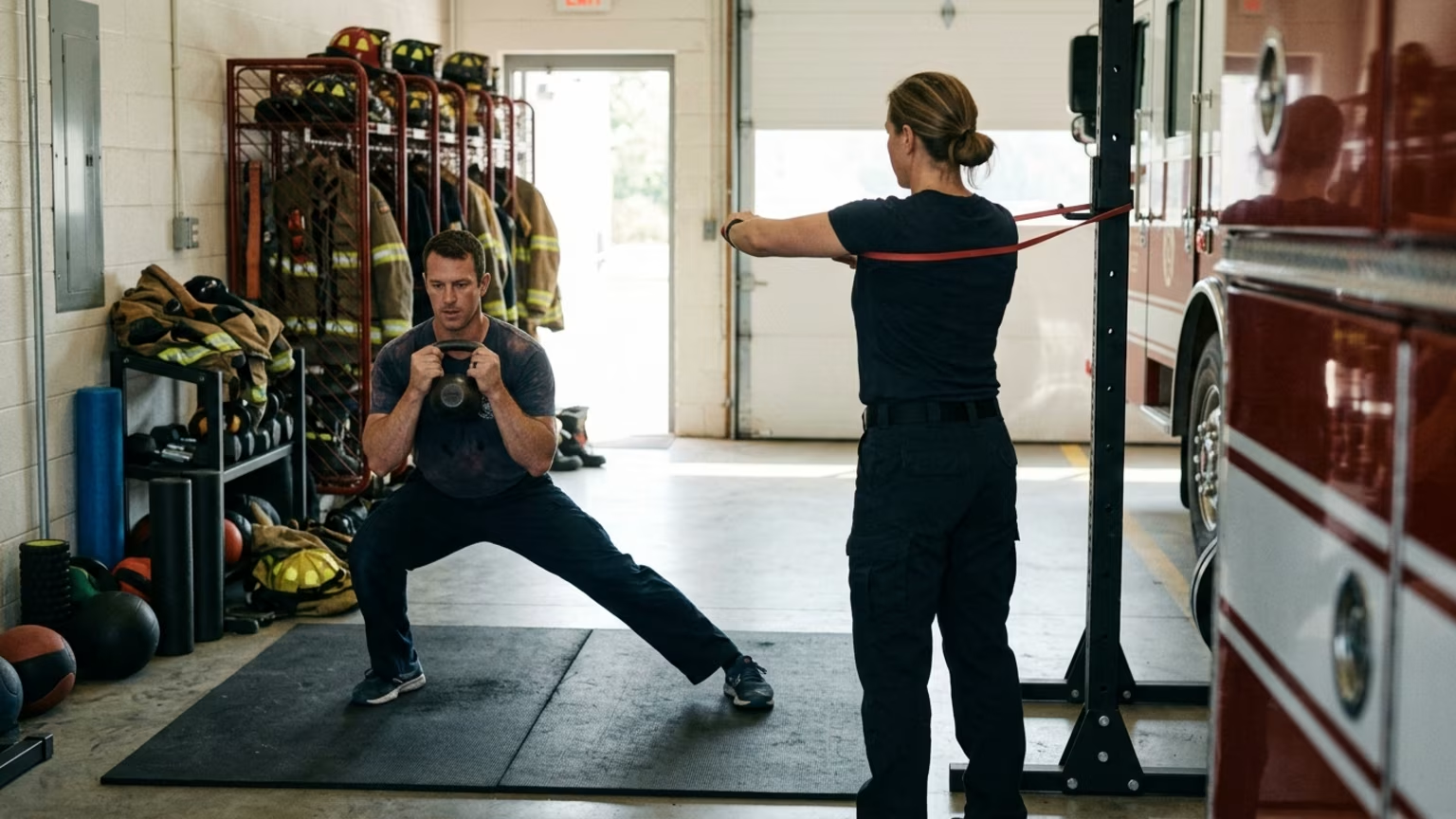

Compare mobility and strength for first responder duty, with shift-based training choices, early symptom reporting and workplace safety controls.





Between calls, mobility work and progressive strength training offer different ways to prepare for duty, and the decision is which fits the shift without adding poorly timed load.
Mobility and movement practice focus on accessing useful positions and moving through them with control. In this comparison, their role is to support movement choices for work rather than to build tolerance for heavy or repeated loading. That makes them one part of preparation rather than a complete conditioning plan.
The physiological distinction stays practical: available movement is not the same as capacity to produce or absorb force. Mobility addresses the positions a responder needs. Progressive loading addresses the demands placed on the body in those positions. The approaches overlap but answer different questions.
A movement-focused approach to the back considers bending and changing position during lifting or carrying. Its strength is movement variety, not the idea that one spinal position suits every task. The broader capacity framework also includes trunk and hip strength plus load-management decisions.
For shoulders, mobility work concerns access to required reaching and overhead positions. The useful question is whether the responder can use the positions demanded by tools or patient movement. Reaching a position and tolerating force there are separate training goals.
For knees, movement practice relates to the positions used in squatting and kneeling. It can sit alongside preparation for stairs and loaded movement. The comparison is not flexibility against strength; it is access to movement alongside tolerance for the work.
At the feet and ankles, movement preparation belongs beside balance and exposure to the surfaces encountered on duty. Stair work and uneven terrain create different demands from moving on predictable ground. A useful plan considers those tasks rather than treating flexibility as the sole objective.
The editorial priority is useful movement range. Mobility earns its place when it serves a work demand, but a responder’s preparation also needs a way to build tolerance for load and repetition.
Progressive strength and task exposure focus on developing capacity for force and repeated work. Here, a capacity-based framework includes strength and aerobic conditioning alongside balance and job-specific tolerance. It is not limited to lifting heavier weights.
Progression concerns the demands being added: load or volume, speed or terrain, and overhead work. These variables do not all need to increase together. The practical aim is to prepare for recurring duties without turning every session into another high-demand exposure.
A back-capacity approach can include progressively loaded hinges and carries. Squats and trunk-resisting exercises also fit that approach. Their role is preparation for lifting and carrying, not a promise to correct a particular spinal structure.
Progressive pushing and pulling belong alongside overhead tolerance and scapular control. Grip-to-trunk coordination also matters within this framework. The work demand is not just reaching a tool or patient; it is tolerating repeated use of the arms away from the body.
For knees, capacity work is organized around stairs and squatting as well as lunging and kneeling. Deceleration and loaded movement add demands beyond simply reaching a position. Gradual exposure makes these tasks part of a broader plan rather than a sudden test of toughness.
Foot and ankle preparation can include progressive calf and foot strengthening plus single-leg balance. Walking or running exposure should match current capacity. Footwear review and gradual terrain exposure add task context without making a particular exercise sequence the whole prevention strategy.
An aerobic component belongs in the same framework. Strength work and movement practice are not competing replacements for endurance. Across a career, the plan has to account for repeated physical demands rather than only performance in a brief training session.
Individual conditioning also sits beneath workplace controls. NIOSH identifies patient handling as the single greatest work-related musculoskeletal-disorder risk factor for healthcare workers. It recommends accessible assistive lifting devices and worker training within safe-patient-handling programs. For EMS, the operational question includes equipment and team procedures as well as personal capacity.
NIOSH places responsibilities on both sides of that system. Employers evaluate handling risks and provide accessible equipment while promoting its use. Workers follow established procedures and participate in regular training. This keeps injury prevention from becoming only an individual fitness obligation.
This is a capacity-management comparison, not a validated injury-prevention protocol. The evidence assembled here does not establish a universal progression rate or shift-length and sleep-deficit cutoffs, and it is thinner for police-specific and body-region-specific prevention. NIOSH also notes that much patient-handling research concerns standard hospital or nursing-home settings rather than emergency response. The decisions below are therefore planning principles rather than an individual exercise prescription.
Shift length matters, but it does not describe the whole training load. Call demands and prior sleep also belong in the decision. The following comparisons use those variables without inventing a universal cutoff.
When call volume is manageable and recovery has not been crowded out, progressive strength or task exposure has a clearer place in the plan. Mobility can support the positions used in that work. It does not need to become a competing session.
The choice should reflect upcoming work as well as recent work. A quiet period between calls is an opportunity to train, not evidence that the rest of the shift will stay quiet.
A shorter tour can still include high-demand calls and repeated awkward work. In that situation, the decision follows what was done rather than how many hours the shift occupied. The training plan should account for patient movement and equipment handling instead of treating a shorter rostered shift as a low-load day.
Movement practice can address the positions needed for those duties. Additional strength work remains a load-management choice, not a requirement to prove that conditioning matters. The aim is to preserve the place of progressive training across the career rather than force it into every available window.
An extended shift with repeated lifting or equipment carriage is already accumulating task exposure. The planning priority is to avoid stacking unusually heavy training onto that workload. Movement practice may take a larger share of the training window while additional loading is reduced.
NIOSH’s systems approach remains central when calls involve moving patients. Available lifting aids and coordinated procedures address the task itself. Personal strength is not a replacement for those controls.
After interrupted sleep or accumulated sleep loss, the framework favors modifying total training load rather than adding a demanding session simply because time is available. Movement work can retain a place without becoming a test of effort. A missed session is not a reason to compress extra work into the next opening.
A plan that accounts for sleep disruption across shifts keeps recovery in the decision. Mobility remains movement preparation, not a way to cancel the workload of an interrupted night.
When symptoms begin changing work technique or confidence, neither more mobility nor more loading is the default answer. The research framework places early reporting and load modification ahead of pushing through. Symptoms that alter gait or lifting also change the training decision.
Persistent or worsening symptoms warrant assessment by an appropriate healthcare professional. The same applies when symptoms limit function. A responder can still complete a shift and still need help deciding what activity remains suitable.
The distinction between ordinary soreness and a changing work limitation belongs in that conversation.
After leave or a period of reduced activity, previous training loads are not the automatic starting point. The framework supports gradual increases in task exposure rather than an immediate return to the hardest version. That may involve load or speed, terrain or volume, depending on the demands being rebuilt.
Mobility can support needed positions during that process. Progressive strength and exposure supply the capacity-building side. When symptoms are present, exercise selection and adjustment belong with a qualified professional.
A common error is treating an endless mobility routine as preparation for repeated force. The reverse error is treating strength as the answer to every awkward task. Both miss the distinction between individual capacity and the conditions under which work happens.
The PEDro record for an updated review reports moderate evidence that patient-handling training alone had no effect on musculoskeletal health. That finding concerns handling education rather than a direct comparison of mobility and strength. It supports treating technique instruction as one layer alongside equipment and workplace procedures.
Another error is hiding symptoms until duty performance breaks down. Early reporting belongs in the framework when pain changes sleep or movement, grip or stair confidence. Reporting should lead toward assessment and appropriate load modification rather than stigma or a demand to prove toughness.
The National Registry of Emergency Medical Technicians’ LIFE Study announcement identifies job-related injuries alongside harmful exposures and workplace violence. It also identifies significant physical and psychological stress as occupational concerns for firefighters and EMS clinicians. That wider context fits training across a full career better than a single corrective routine.
Between calls, the better choice is not the approach that looks most demanding. It is the one that keeps movement available, builds useful capacity over time and fits the recovery the job leaves.
For individual responders and the people guiding crew fitness, mobility-versus-strength decisions are part of balancing capability; Rescuris brings research-led editorial guidance to that task. It addresses competing advice about strength and endurance alongside mobility and body composition, keeping demanding schedules and long-term health in view.
Rescuris publishes evidence-aware guidance for firefighters, police officers, paramedics and other first responders on fitness, recovery, sleep, nutrition, stress resilience and long-term capability.


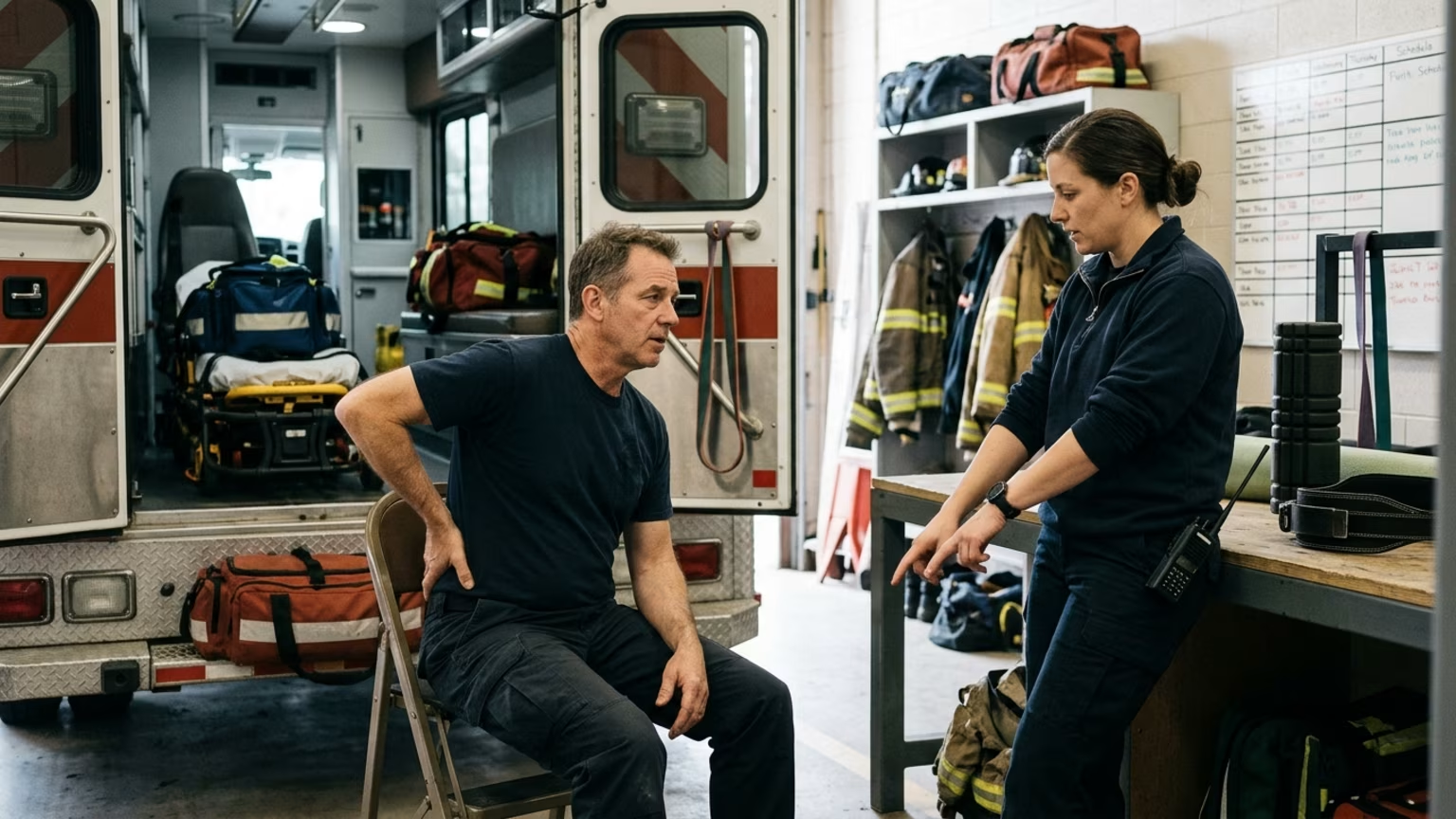



Read practical guidance on first responder fitness, recovery, sleep, nutrition and resilience for demanding work and a long, active career.
read the blog
