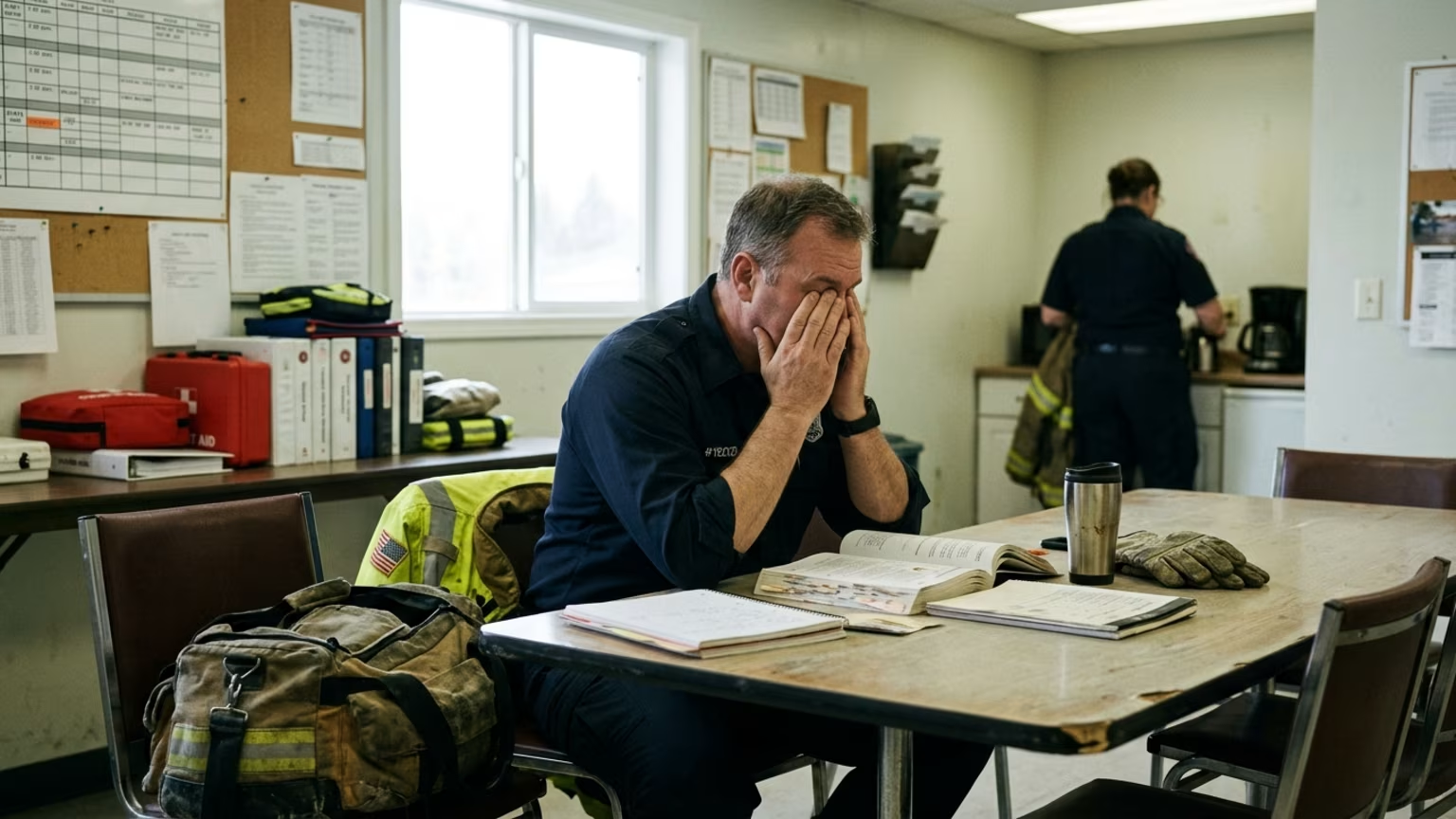

Use a simple log to spot patterns across duty, training, sleep and symptoms, with guidance on training changes and when to seek qualified care.





How do you recognize when duty and training are adding up? Look for repeated overlap between demanding work, training and limited recovery alongside new or worsening symptoms or reduced ability to do usual tasks.
Here, cumulative load means considering work and exercise together with the opportunity to recover. The useful question is not only how hard a training session felt. It is what happened around that session and whether symptoms changed across the same period.
A 2026 scoping review mapped 613 studies on movement behaviors and mental health among frontline workers. The review notes that demanding and irregular work conditions can disrupt circadian rhythms and reduce opportunities for restorative sleep. That makes recovery context relevant when recording physical demands.
The review found much more research on sleep than on physical activity or sedentary behavior. Measuring all three together was uncommon. Its findings support paying attention to the whole pattern rather than treating training as separate from the rest of the working week.
The evidence needs a clear boundary. Much of the research was cross-sectional, association-focused and self-reported. Emergency personnel were underrepresented, which limits how confidently findings apply to specific services. The authors caution that these studies cannot establish change within an individual or cause and effect and are better suited to identifying monitoring priorities than prescribing sleep or exercise amounts.
The review also cautions against treating exertion at work as interchangeable with recreational physical activity. For a practical record, that means keeping duty demands and training visible as separate categories rather than assuming they represent the same experience.
Make a brief entry after each shift or training session. Record the demands, recovery context and symptoms together, then note whether things are improving or worsening and what action you took.
The log is a non-diagnostic pattern-spotting aid. It cannot determine what caused a symptom or identify an injury. Its purpose is to make relevant details available when reviewing training choices or discussing concerns with a qualified professional.
Keep the format simple enough to repeat. A short entry that captures the same categories is more useful for this purpose than an elaborate account that becomes difficult to maintain.
Record shift length and overtime. Note overnight or interrupted work along with unusually demanding calls. Include relevant lifting, carrying or prolonged exertion.
The aim is to preserve what the word “shift” would otherwise leave out. Your record should distinguish the scheduled work period from the demands you experienced within it. There is no need to force every task into a single intensity rating.
For a broader look at organizing these details, see our guide to keeping calls and training stress in the same record.
Record the activity and its approximate duration. Describe perceived effort in straightforward terms such as easy, moderate or hard. Note whether the session was modified or stopped.
Keep the planned session separate from what you actually completed. If you changed the activity or ended it early, that belongs in the entry. This preserves the decision alongside the demands and symptoms that surrounded it rather than leaving only a completed workout on the calendar.
Record the sleep opportunity you had and whether sleep was interrupted. Add the rest or recovery time available before the next duty period or training session.
Describe the opportunity that was actually available rather than simply marking the day as “off.” A day away from duty and an uninterrupted recovery window are different details in this record. The point is to document the context without turning sleep into another performance target or assigning a pass-or-fail label to a difficult schedule.
Record new or worsening pain and stiffness. Include unusual soreness or fatigue. Note any reduced ability to do your usual work or training.
Use plain descriptions rather than medical labels. Keep the focus on what changed and whether it affected normal activity. “Usual function” matters here because the record is not only about discomfort. It also captures whether familiar tasks or sessions have become harder to carry out as expected.
Mark whether symptoms are improving, stable or worsening. Record whether you adjusted training, sought advice or continued as planned.
This final part connects observation with the decision that followed. Without it, a record may show demanding shifts and symptoms but leave out how you responded. It also gives you something concrete to discuss later instead of relying on a general impression that the whole period was difficult.
Look for repeated co-occurrence across the record. Do symptoms appear after demanding duty combined with training? Do they worsen during periods with interrupted sleep or little recovery time? Are they improving or remaining unchanged?
These are questions for reviewing a pattern, not a formula for assigning blame to a particular call or exercise. Keep the observations separate from your interpretation. “Symptoms followed this combination of demands” is a different statement from “this activity caused an injury.”
The practical outcome is a clearer next decision. That may mean reconsidering a planned session or bringing the record into a conversation about symptoms. It does not mean calculating a personal injury-risk score from the entries.
If symptoms are worsening, interfering with usual function or not settling, consider reducing or modifying training and contacting a qualified health professional for an individual assessment. Persistent or concerning symptoms deserve qualified care rather than continued logging alone.
The research does not establish a specific symptom threshold or number of days to wait. Use the record to support the conversation rather than as a requirement to complete before seeking advice. In an emergency, follow local emergency procedures.
Write the entry after each shift or training session, then review the recent pattern when considering the next planned session. Include the recovery opportunity before the next duty period rather than looking only at the workout calendar.
This approach keeps timing visible without assuming a predictable working week. Record overtime and interrupted work where they occur. When the schedule changes, note the recovery time that remains available instead of comparing the week with an ideal version of it.
The occupational context matters. Reporting by Australian Associated Press described a qualitative study of rural Australian first responders whose participants reported sleep deprivation and difficulty taking time off to recover. Limited staffing was among the contextual factors. These accounts describe participants’ experiences rather than how common the problem is across every service.
That distinction supports a practical editorial point: a log should record constraints, not grade personal commitment. Difficulty obtaining recovery time belongs in the account of the working period.
For the training decision itself, our guide to choosing whether to push, modify or recover around shifts is a related resource. Keep that decision alongside the symptoms and work demands already recorded.
It keeps long-term capability in the planning conversation, but these sources do not establish that logging prevents injury or improves retirement health.
The proposed value is continuity. A record can retain context about changing demands and symptoms for conversations with qualified professionals. The same categories remain relevant to discussing activity even when duty schedules change or service ends.
Retirement health should remain a goal rather than an outcome promised by a tracking system. The useful question is whether present demands and recovery opportunities fit with maintaining usual function. A full training calendar is not the purpose of the record.
For someone approaching retirement, this framing also leaves room to discuss physical concerns before making the next exercise decision. The log supplies context for that discussion without replacing an individual assessment.
The next useful topic is adjusting training when sleep has been poor. That question connects the recovery context in this log with the choice of what to do during the next available training window.
Start with our guide to weighing training options after disrupted sleep. Read it alongside the record of duty demands and symptoms rather than treating sleep as a separate issue. The editorial priority remains the same: make the demands visible before deciding what belongs next.
Counting workouts while leaving demanding shifts out of the picture is a blind spot Rescuris addresses through evidence-aware recovery coverage. Its editorial work helps emergency-service professionals consider accumulated physical wear alongside duty readiness, connecting practical recovery guidance with irregular schedules and long-term capability rather than treating every training target as more pressing than recovery.
Rescuris publishes evidence-aware guidance for firefighters, police officers, paramedics and other first responders on fitness, recovery, sleep, nutrition, stress resilience and long-term capability.


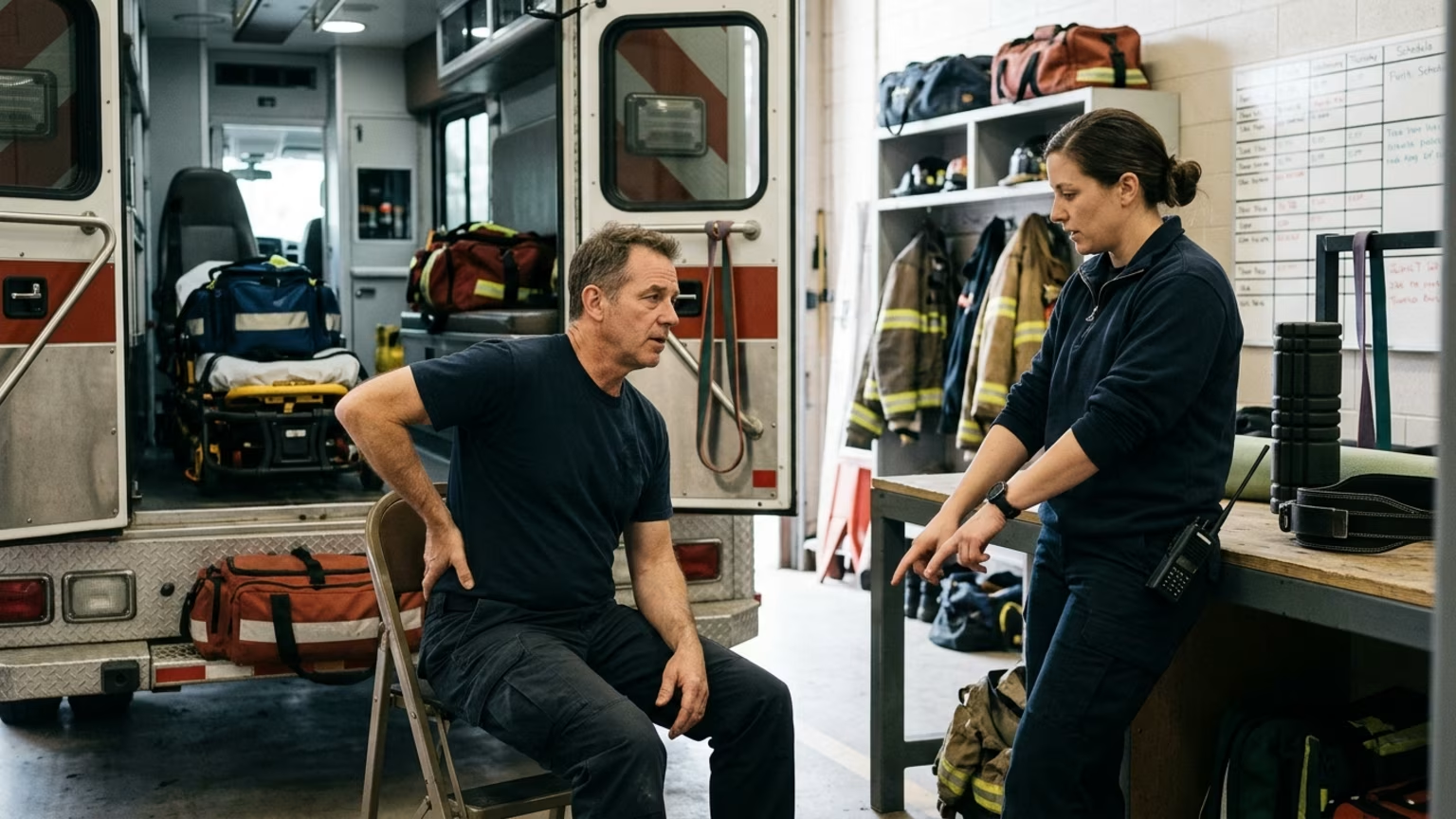



Read practical guidance on first responder fitness, recovery, sleep, nutrition and resilience for demanding work and a long, active career.
read the blog
