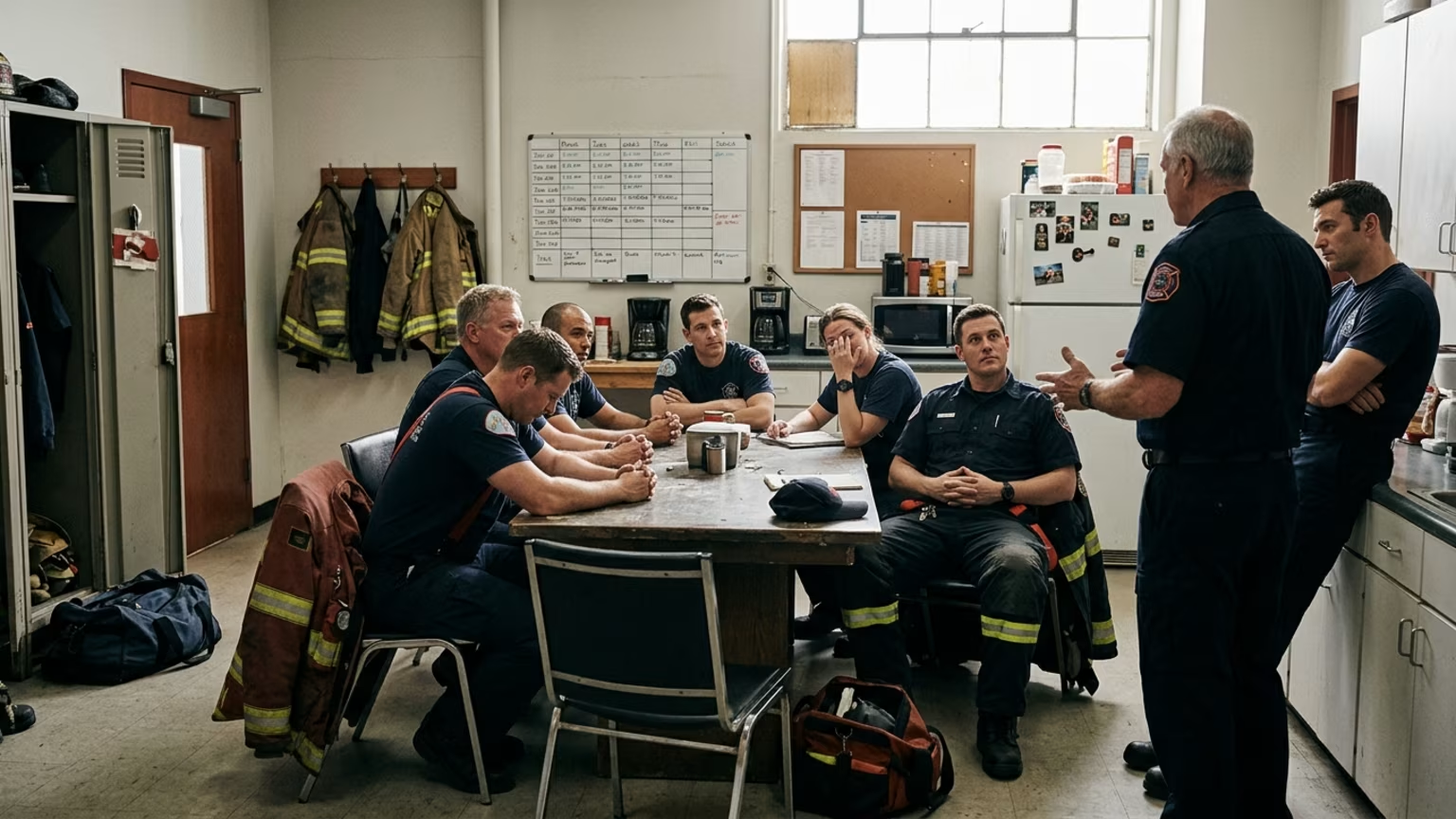

Learn how first responders can distinguish between temporary post-shift fatigue, cumulative occupational stress, burnout and trauma-related symptoms.





If you are in immediate danger, call 911. For 24/7 support, call or text 988 and press 1 for the Veterans Crisis Line, or text 838255.
How do you know when a difficult shift has turned into a persistent operational problem? You look for continuous changes in sleep quality or mood that do not resolve with normal rest. Persistent issues with daily concentration or family relationships are also clear warning signs.
Before addressing these operational changes, immediate safety comes first. If you or a colleague are in immediate danger or experiencing a crisis, call 911. You can also reach the Suicide & Crisis Lifeline by calling or texting 988. Press 1 for the Veterans Crisis Line, or text 838255. These confidential resources provide immediate assistance for anyone struggling with severe trauma-related distress.
A single demanding call or irregular shift will naturally cause temporary fatigue and irritability. The physical wear of emergency response creates temporary stress that usually resolves after a few days off duty. Recognizing when temporary strain shifts toward cumulative occupational stress requires monitoring your baseline habits carefully. First responders routinely face difficult incidents, but the lingering effects of those calls should not become permanent fixtures of off-duty life.
The physical and mental wear of emergency response is not a single, isolated reaction. A 2026 review of movement behaviors and mental health among frontline workers similarly describes these workers as routinely exposed to high occupational demands. The review notes routine exposure to trauma, irregular schedules and chronic stress. Associations are reported between those pressures and burnout, anxiety or depression. These occupational pressures are also linked to post-traumatic stress symptoms and sleep disturbance.
The 2026 Frontiers in Psychiatry editorial synthesizes 43 articles using several research designs. Its synthesis includes systematic reviews, qualitative studies and intervention research. Longitudinal analyses, structural-equation modeling and latent-profile analysis are also included. Research summarized in a 2026 editorial identifies chronic occupational stressors, workload and work-life imbalance as issues affecting emergency personnel. These issues impact workers across nursing, EMS, firefighting and policing.
The editorial reports that sleep quality can mediate the relationship between job demands and mental health. Pronounced sleep disturbance has been associated with higher anxiety symptoms in nursing staff. Sleep is a primary mechanism for resetting the nervous system after a challenging operational period. When sleep disturbance becomes chronic, the body loses its primary recovery mechanism.
Furthermore, the editorial summarizes research in which sleep quality emerged as a mediator between job demands and mental health among emergency personnel. This connection shows how heavily the nervous system relies on restorative rest to process high-stress incidents. Without predictable recovery windows, the biological systems responsible for stress management remain continuously activated. The 2026 Frontiers in Psychiatry editorial characterizes burnout as an organizational challenge rather than merely an individual weakness.
Treating this prolonged activation as a personal failure ignores the documented realities of emergency response work. The chronic nature of shift work prevents the autonomic nervous system from fully returning to baseline between calls. When workload and irregular schedules constantly interrupt the recovery phase, physical tension accumulates alongside psychological fatigue. Acknowledging this biological process helps active-duty personnel understand why simple willpower cannot overcome severe operational exhaustion.
You monitor specific functional areas for persistent changes that last across multiple shifts and off-duty days. A hard shift usually produces temporary fatigue and poor sleep that improve with recovery. Cumulative occupational stress occurs when these changes persist across repeated shifts. These outcomes show that recognizing cumulative stress is vital for long-term capability.
The 2026 research editorial covers 43 articles on mental-health resilience in emergency and related occupational settings. It also links burnout with staff retention, work performance and patient safety. Quality of care and intentions to change jobs or leave the profession are similarly affected. When fatigue begins to impact patient safety and overall work performance, the issue has progressed beyond temporary post-shift tiredness.
Trauma-related symptoms present quite differently from general burnout or routine fatigue. First-responder research also discusses social detachment, diminished interest and reduced emotional reactivity among some responders with PTSD. A 2026 first-responder study discusses diminished interest, emotional numbing and social detachment as features observed in some responders with PTSD. When a responder stops engaging with their usual hobbies or withdraws from their team, it is often a visible indicator of underlying occupational strain.
Families notice these operational shifts as well. A 2026 study reports that family members of emergency responders described safety concerns, volatile moods, secondary trauma and increased household responsibilities. Understanding these distinctions helps responders know when to seek external assistance. Recognizing the heavy toll on spouses and children is a vital component of managing long-term career fatigue.
The intersection of disrupted sleep and heightened anxiety further complicates this recovery landscape. Emergency personnel often misinterpret chronic irritability or emotional blunting as normal components of aging within the profession. Normalizing these severe functional changes prevents early identification and intervention. Tracking sleep patterns and mood changes objectively provides a clear record of when a hard shift has transitioned into a chronic problem.
You should seek peer support early to discuss functional changes, and you should escalate to professional care when symptoms impair your sleep, work performance or safety. The editorial identifies peer support, collegial relationships, social connectedness and supportive teams as protective factors. Speaking with a trusted colleague helps responders name what has changed. It is a useful early step for those who want a confidential conversation with someone who understands the job.
Peer support should be viewed as an accessible entry point rather than a replacement for clinical treatment. A structured peer-support program provides a safe environment to discuss work-related strain before it becomes overwhelming. These connections help active-duty personnel maintain their perspective after challenging incidents. Relying on supportive teams can mitigate the initial impact of severe occupational demands.
Professional assessment becomes appropriate when symptoms interfere heavily with daily function. The sources describe professional training, supervision and early intervention as vital components. Trauma-focused interventions and evidence-based care complete this career-long support system. Knowing when shift-work sleep problems need professional evaluation is a critical part of this process.
Waiting for symptoms to become unbearable before contacting a qualified clinician often prolongs the recovery period unnecessarily. Seeking clinical help does not require having a formal diagnosis first. A mental-health professional can evaluate sleep disturbances, mood volatility and behavioral changes objectively. Early intervention helps personnel address intrusive thoughts or emotional numbing before these issues compromise their operational readiness completely.
Managing stress proactively helps maintain operational readiness and prevents the severe burnout that forces personnel to leave their professions prematurely. The 2026 Frontiers in Psychiatry editorial treats burnout as a multifaceted organizational challenge. Ignoring these factors compromises long-term health and physical capability. Treating recovery as a shared organizational responsibility ensures that emergency personnel can maintain their physical capability.
Recovery depends on more than just individual coping skills. It requires supportive leadership, manageable workloads, predictable recovery opportunities and a strong ethical climate. Following a reliable long-term stress management guide requires building these structures systematically. Emergency services must evaluate their internal structures to support their workforce effectively.
Without adequate recovery systems, the compounding effects of chronic stress can follow first responders into retirement. A career spent navigating irregular schedules and traumatic incidents without proper support creates lasting physiological wear. Addressing these issues actively during active duty protects physical and mental health for life after service. Building resilient habits now pays significant dividends in the decades to come.
The goal is to reach retirement with both physical mobility and psychological clarity intact. Personnel who manage their stress loads continuously throughout their careers report smoother transitions into civilian life. Establishing clear boundaries between on-duty demands and off-duty recovery time forms the foundation of this long-term strategy. True career longevity requires respecting the body's fundamental need for restorative downtime.
Evaluating the role of fitness and physical routines in managing occupational stress is a logical next step. Exercise supports general recovery, but it cannot single-handedly cure severe burnout or trauma-related symptoms. The reviewed sources show clear associations between high occupational demands and chronic sleep disturbance. Exploring load management strategies for first responders can help personnel balance physical training with unpredictable shift fatigue.
Treating severe trauma symptoms or clinical burnout as a simple lack of individual resilience leaves emergency personnel without viable paths to recovery. Conflicting advice that prioritises short-term performance while ignoring long-term health only compounds this occupational strain, which is why Rescuris formulates practical, evidence-led guidance explicitly for the realities of first-responder work. We help active personnel maintain their physical and mental capability through irregular shifts and demanding duty.
Rescuris publishes evidence-aware guidance for firefighters, police officers, paramedics and other first responders on fitness, recovery, sleep, nutrition, stress resilience and long-term capability.


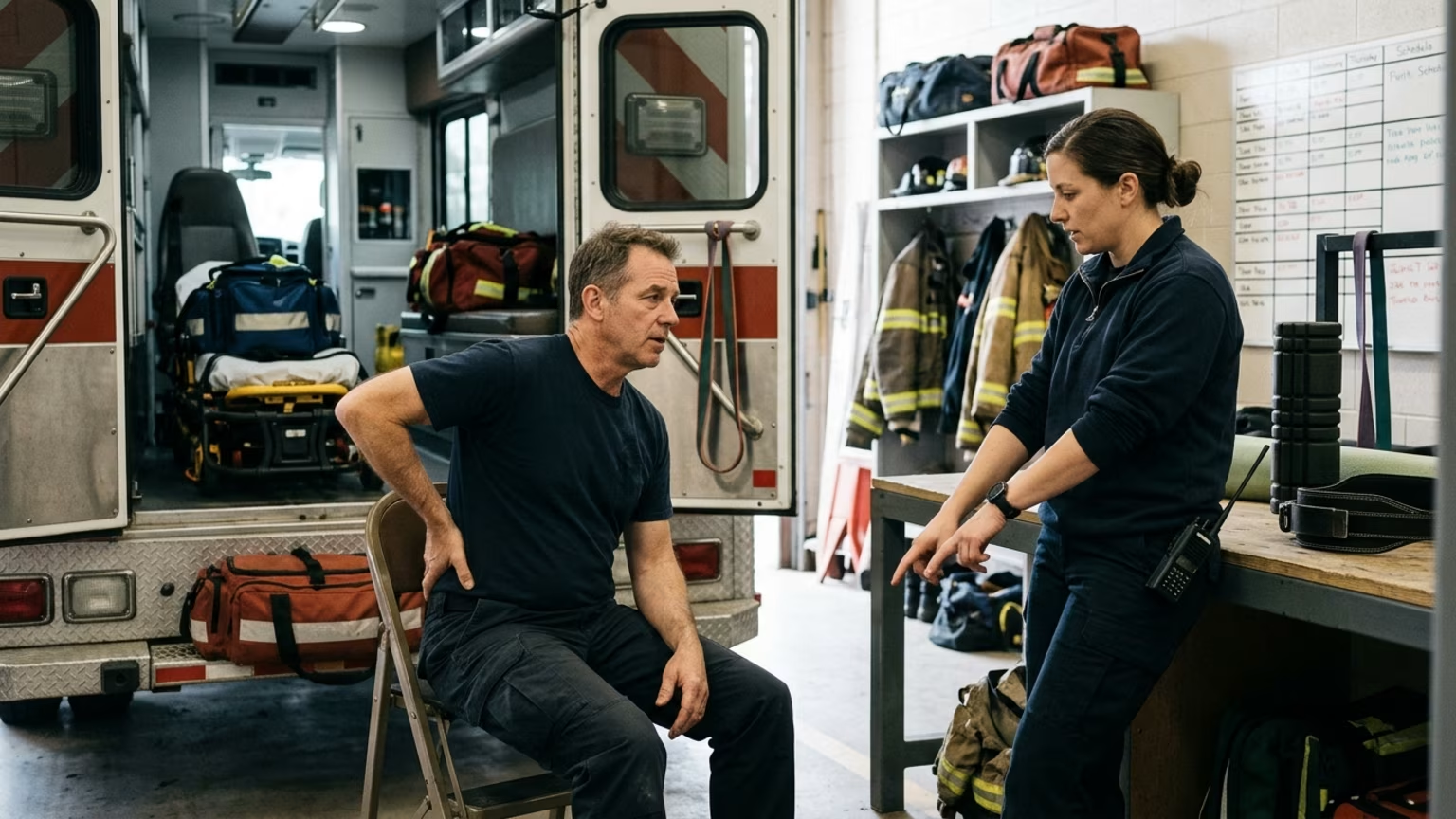



Read practical guidance on first responder fitness, recovery, sleep, nutrition and resilience for demanding work and a long, active career.
read the blog
